



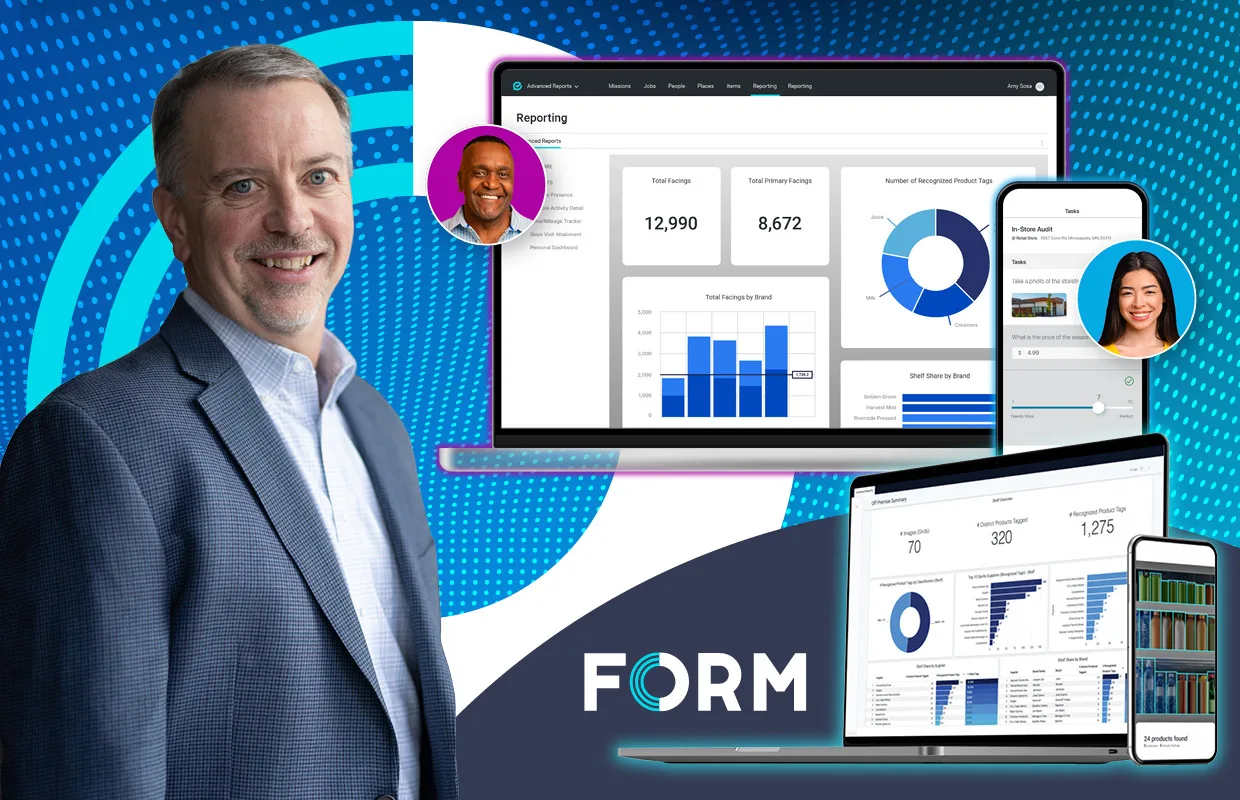
Kevin Corcoran, Chief Customer Officer at FORM, explains how artificial intelligence, augmented reality, and real-time data are reshaping retail execution for food and beverage brands.
Q&A WITH KEVIN CORCORAN, CHIEF CUSTOMER OFFICER, FORM
Firstly, how are artificial intelligence and augmented reality transforming food and beverage merchandising, and what benefits are brands seeing?
Kevin Corcoran, Chief Customer Officer (KC): Historically, consumer packaged goods (CPG) brands have relied on manual in-store surveys, spreadsheets, email reporting, and retrospective data that is often too slow to act on.
Today, artificial intelligence (AI) provides real-time retail execution data at every location, whilst augmented reality (AR) and AI agents give field teams much deeper store-level and stock-keeping unit (SKU)-level insight.
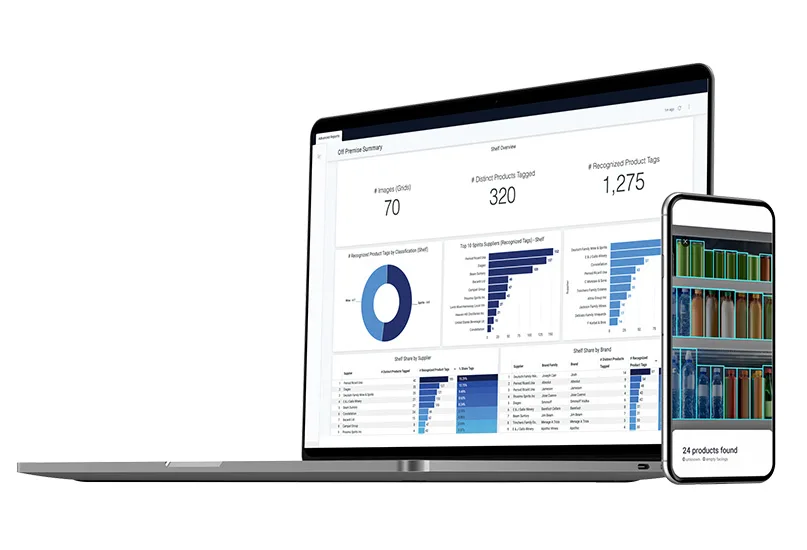
AR allows field representatives to point a mobile device at a shelf and instantly view SKU-level information, including product availability, missing items, pricing, planogram compliance, and point-of-sale materials (POSM). It turns unstructured shelf conditions into actionable insight at the point of execution.
The result is greater speed and accuracy. Brands using our image recognition technology complete merchandising audits around 75 percent faster than manual methods, reducing repeat store visits and improving confidence in the quality of retail execution data.
Can AI finally eliminate out-of-stocks and pricing errors?
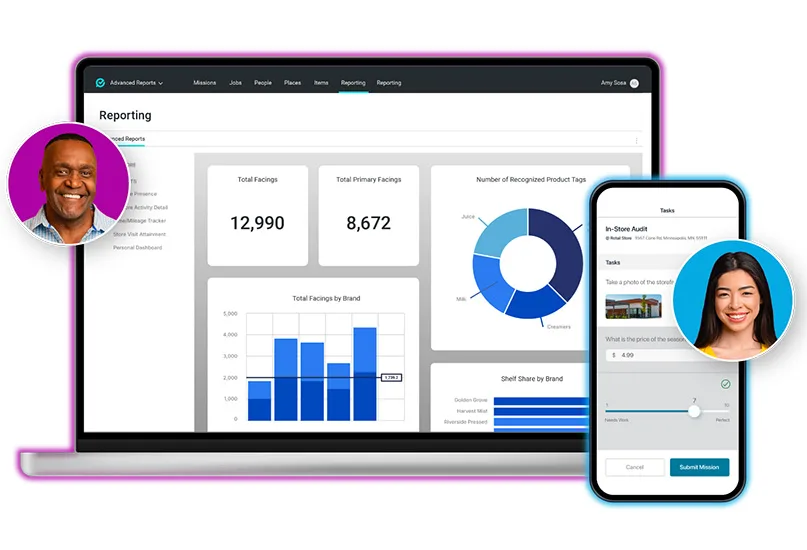
KC: “Eliminate” is probably too strong, but AI can bring the industry much closer than before. From a single in-store photo, our AI automatically detects out-of-stocks, pricing discrepancies, and gaps across shelves, coolers, and displays, including competitor products.
The key advantage is speed. Under traditional processes, representative collected data was turned into reports and reviewed days or even weeks later. By then, valuable sales opportunities had already been lost. Today, issues are identified immediately, affected SKUs highlighted, and representatives can correct problems before leaving the store.
Retail will never be completely free of errors because human execution will always play a role. However, automatic, real-time detection significantly reduces the time that out-of-stocks and pricing errors remain unnoticed.
How are AI and AI agents helping brands turn retail data into real-time action?
KC: The biggest change is that frontline teams can now act on insights rather than simply collect data. By embedding AI agents directly into mobile applications, representatives receive guided decision-making instead of relying on static spreadsheets or planograms that may already be out of date. They can ask specific questions and receive immediate, data-driven recommendations.
With GoSpotCheck integrated with Salesforce Consumer Goods Cloud, AI can recommend practical next steps based on current shelf conditions rather than simply reporting problems. For example, it can suggest promotional activity based on shelf presence or identify priority actions for a particular store.
Another emerging capability is agent-assisted ordering. By combining shelf data, in-store inventory, sales history, and existing orders, AI agents can optimise ordering decisions, helping brands improve consistency across their supply chains.

“We’re moving beyond simply seeing the shelf to enabling systems that can respond automatically”
Kevin Corcoran, Chief Customer Officer, FORM
How can AI personalise merchandising at the store level?
KC: Every store serves a different customer base, competitive environment, and shopping behaviour. AI makes it practical to reflect those differences instead of applying a single national planogram everywhere.
By capturing SKU-level and POSM data across shelves, coolers, and displays, brands can understand how products perform against competitors in each location, including assortment, pricing, and share of shelf.
Those insights support store-specific decisions, such as which SKUs to prioritise, where promotions are most likely to succeed, and how product facings should be adjusted to match local demand. This helps brands narrow the gap between their ideal retail execution strategy and what is actually happening in-store.
Finally, what will the connected shelf look like five years from now?
KC: We’re moving beyond simply seeing the shelf to enabling systems that can respond automatically. The future is continuous, real-time shelf intelligence, where AI agents not only identify issues but also coordinate responses across field teams and business systems.
Field teams will continue to play an important role. AR and AI agents remove much of the time spent on manual documentation and audits, allowing representatives to focus on customer relationships, problem-solving, and strategy. Ultimately, AI enhances people rather than replacing them.
The businesses that succeed will be those that standardise shelf data across partners and platforms whilst continuing to invest in the people who build customer relationships.
The Disruptor is an editorial series published on Food & Beverage Outlook, created to showcase the people, companies, technologies, and ideas challenging established approaches across the global food and beverage industry.
Food & Beverage Outlook features leadership insights and company stories from organisations shaping food production, processing, packaging, distribution, hospitality, retail, and the wider consumer landscape.
Produced as part of the Outlook Publishing global network of B2B industry magazines, The Disruptor highlights the innovators introducing new products, business models, technologies, and solutions that are changing how the industry operates.