



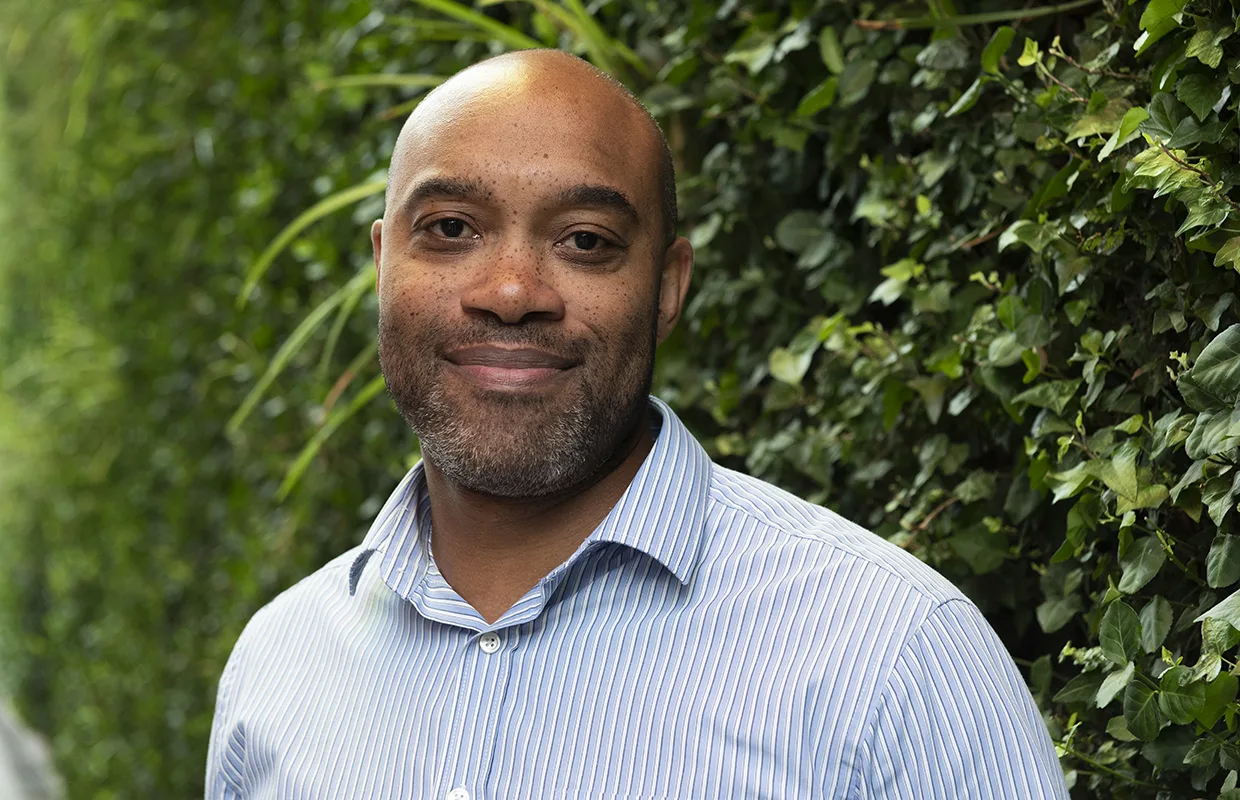
Joe Yalley-Ogunro, Group Head of Sustainability at Finlays, explains why collaboration, traceability, and practical decarbonisation will be essential to building more resilient and sustainable beverage supply chains.
Q&A WITH JOE YALLEY-OGUNRO, HEAD OF SUSTAINABILITY, FINLAYS
Finlays has cut Scope 1 and 2 emissions by 26 percent since 2022. What’s been the key to that progress?
Joe Yalley-Ogunro, Global Head of Sustainability (JYO): There are two key things that have enabled us to reduce our Scope 1 and 2 emissions by more than a quarter since 2022. Firstly, many of our businesses have installed solar panels or switched to green electricity tariffs, allowing us to increase the amount of renewable electricity used to power our factories.
The second reason relates to investment in energy efficiency and optimisation. For example, installing a mechanical vapour recompression (MVR) unit at our Kenya site is reducing the use of water and energy at the same time.
As we look to accelerate progress towards our carbon reduction targets, we will continue investing in more initiatives like these across the business. In doing so, we not only reduce emissions, but also make our business more efficient and resilient.
Which part of the Sustainable Future 2030 strategy has been the most challenging to advance?
JYO: Across all three pillars of our strategy – Climate Net Zero, Sustainable Supply, and Our People – a common challenge has been building clear ownership and strong governance. Our progress depends on helping people understand why these issues matter, creating shared accountability, and embedding them into everyday decision-making. Once that foundation is in place, organisations are better equipped to develop and implement lasting solutions.
“We not only reduce emissions, but also make our business more efficient and resilient”
Joe Yalley-Ogunro, Head of Sustainability, Finlays
Why is industry collaboration now essential to achieving sustainability goals?
JYO: Delivering a sustainable natural beverages industry is too complex for any one organisation to achieve alone. Our supply chains contain many risks, from the security of raw materials to the human rights risks faced by the many people working in agriculture that our supply chain relies on. We can only address these challenges through close collaboration with stakeholders across the value chain, from producers through to our customers.
The same is true when it comes to net zero. The majority of our carbon footprint comes from third parties across our supply chain. This means the only solution is to collaborate actively with suppliers, customers, industry peers, and competitors alike to address these issues together. For example, this year Finlays launched a decarbonisation pilot, partnering with 11 suppliers to better understand and reduce our Scope 3 and forest, land, and agriculture (FLAG) emissions, and ultimately deliver impact beyond our own factories.
What sustainability challenge is the beverage industry least prepared for?
JYO: There are so many challenges that it is difficult to pick only one. Across the beverage industry, the answer is likely to be different depending on which part of it you operate in. One common environmental challenge, however, will continue to be water use. Water availability, quality, and stress are major risks that businesses across the beverage industry need to understand and work to mitigate.
Our water use increased between 2023 and 2025, and as the business grows, so will our use of water. To help mitigate this, we will continue investing in water efficiency measures and replenishment projects to balance our impact from 2028. However, it is clear we must go further as the company continues to grow.
“The only solution is to collaborate actively with suppliers, customers, industry peers, and competitors alike to address these issues together”
Joe Yalley-Ogunro, Head of Sustainability, Finlays
How is climate volatility changing the way supply chains need to operate?
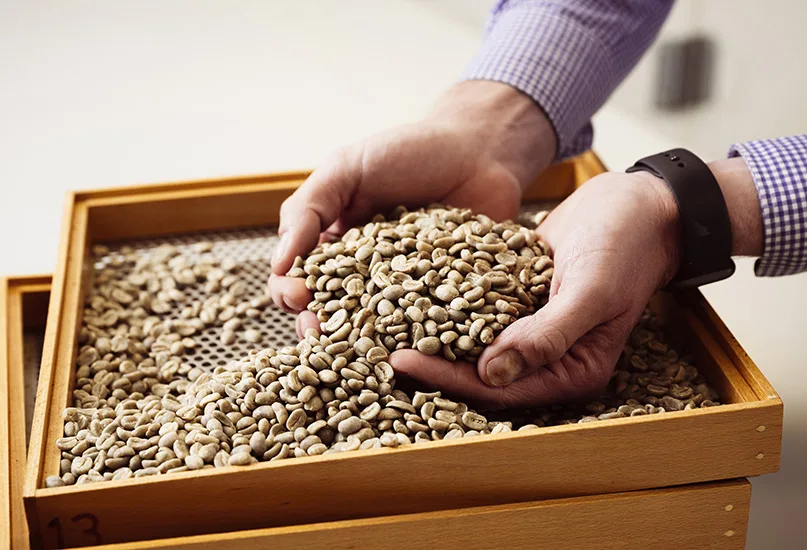
JYO: Supply chains are more closely connected than ever before and being disrupted in many ways that businesses across the value chain can seek to address. In terms of climate impacts, coffee prices reached record highs in February 2025, and volatility is here to stay. This is undeniably linked to extreme weather affecting coffee supply and yields in major coffee-growing regions.
This affects stakeholders across the value chain, from smallholder farmers selling coffee into cooperatives to major commodity traders that pass those costs on to businesses, customers, and ultimately the end consumer.
Why can’t companies? tackle climate and human rights risks alone?
JYO: Successful businesses depend on a wide range of interconnected factors to thrive. Traditionally, companies have focused on managing risks related to business continuity, finance, and investment. Today, they must also address increasingly complex climate and human rights risks across their operations and supply chains.
No single business has the resources, scale, or expertise to address these challenges effectively on its own. Meaningful progress requires collaboration with a wide range of stakeholders, including employees, suppliers, customers, non-governmental organisations (NGOs), industry peers, subject matter experts, and governments. By working together, businesses can share knowledge, drive innovation, and achieve greater impact than they could alone.
For example, Finlays has been a member of the UN Global Compact since 2024, which aligns the operations and strategies of more than 15,000 companies in the areas of human rights, labour, environment, and anti-corruption. This demonstrates Finlays’ commitment to addressing human rights risks across the industry whilst aligning with recognised best practice.
How can brands, suppliers, and producers work together more effectively?
JYO: The key is to start with a shared understanding of each other’s position, priorities, and objectives. Once a clear basis is established, it becomes easier to identify common ground and recognise where compromise is needed. If this is done, intent can be turned into practical projects with agreed outcomes. All of this takes time, effort, and commitment if it is to be meaningful.
And it can be done. Back in 2025, we partnered with Sainsbury’s to launch the UK’s first low-carbon coffee for mainstream retail. To achieve this, we worked with the coffee growers’ cooperative COOPCAFER in Risaralda and the University of the Andes in Colombia, and Cardiff University to produce quality coffee whilst empowering 34 women farmers through a new coffee-growing model. For me, this is a great example of creating shared value through close collaboration.

What role does traceability play in building more resilient supply chains?
JYO: Traceability, or understanding the origins and movement of products through a supply chain, is a critical component of building resilient supply chains and has become a major topic in the beverage industry in recent years. Fundamentally, traceability is about managing risk. When you have traceability, you can understand the risks, and when you understand the risks, you can work to manage them. Developing strong, trusted, and direct relationships with suppliers is the most effective way to achieve traceability.
Where are you seeing the greatest benefits from industry partnerships?
JYO: Finlays benefits from a number of partnerships. One example is our work with World Coffee Research to improve coffee sustainability and explore the future of coffee production. As active members of the Ethical Trading Initiative, Finlays is strengthening its ability to integrate labour and human rights considerations into its supply chain.
We are also beginning to work more closely with suppliers and customers to develop full traceability of key raw materials and address climate challenges across our supply chain. Each of these partnerships creates value, but they all require time, effort, investment, and long-term commitment to deliver meaningful outcomes.
What’s stopping the industry from collaborating more closely?
JYO: The obvious answer is competition. However, we are fortunate that the beverage industry has a strong culture of collaboration focused on sustainable development that creates value for the industry as a whole.
Another challenge is resourcing and investment. We have seen significant price volatility in recent years, and that can encourage a focus on short-term business cycles rather than long-term sustainability. However, we are now seeing increased investment as organisations recognise not only the challenges facing the industry, but also the business benefits of more sustainable operations and supply chains.
Where does the industry need to move faster on sustainability?
JYO: The industry needs to move faster on decarbonisation by scaling solutions that already exist whilst accelerating the development of new ones. For proven approaches such as renewable energy, greater collaboration and shared investment can help drive adoption more quickly and at greater scale. This is why sharing ideas, developing practical solutions, and working together on common challenges will be critical to moving sustainability forward at the pace required.
If you could unite the industry behind one priority, what would it be?
JYO: Climate change poses the single largest existential threat to the natural beverage industry. Our supply chains are complex and fragmented, so only by working more closely together and collaborating on solutions that improve data transparency, protect people across our supply chains, and create more resilient crops can we secure the long-term viability of our sector.
The 1-2-1 is an executive interview series published on Food & Beverage Outlook, created to explore the experience, expertise, and perspectives of the leaders shaping the global food and beverage industry.
Food & Beverage Outlook features leadership insights and company stories from organisations operating across food production, processing, packaging, distribution, hospitality, retail, and the wider consumer landscape.
Produced as part of the Outlook Publishing global network of B2B industry magazines, The 1-2-1 provides focused conversations with the executives, entrepreneurs, and specialists influencing their organisations and the future direction of the sector.