




A new Blue Yonder survey suggests supply chain disruption, livestock disease concerns and rising grocery prices are driving significant changes in US protein purchasing, with consumers shifting away from beef and towards lower-cost alternatives.
Supply Chain Pressures Drive Shift in Consumer Protein Choices
More than half of US consumers are buying less beef as rising prices, supply chain disruption and concerns over the New World screwworm outbreak reshape grocery purchasing behaviour, according to Blue Yonder’s 2026 Consumer Grocery and Protein Trends survey.
The survey found that 55 per cent of consumers have reduced their beef purchases or stopped buying beef altogether. At the same time, one-third of respondents said they have increased their overall protein purchases during the past six months, with shoppers increasingly choosing chicken, eggs, canned proteins and other alternatives to meet health and dietary goals.
Blue Yonder also found that 78 per cent of consumers are concerned the New World screwworm outbreak could further affect beef availability or prices.
Beef Consumption Declines as Consumers Seek Alternatives
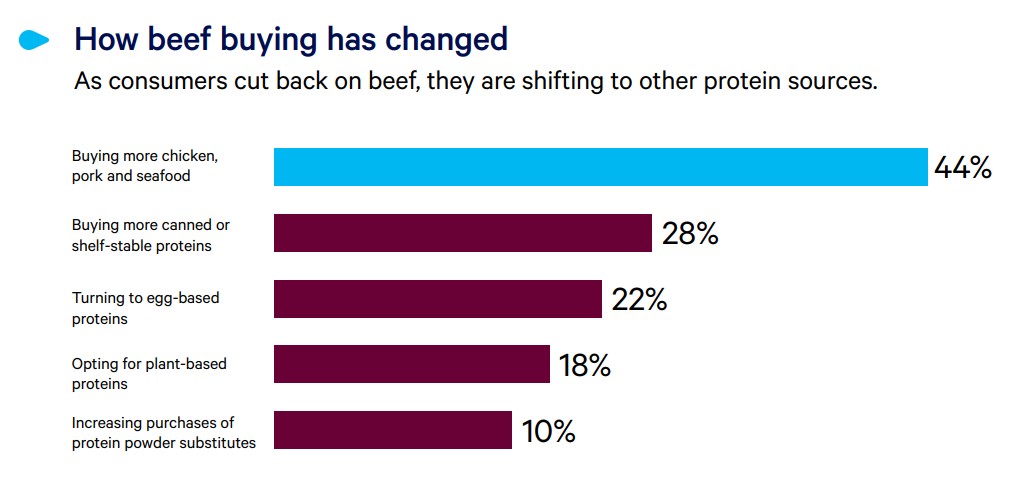
As consumers reduce their beef purchases, many are switching to alternative protein categories.
According to the survey, 44 per cent of respondents are buying more chicken, pork and seafood, while 28 per cent have increased purchases of canned or shelf-stable proteins. A further 22 per cent are choosing more egg-based proteins, 18 per cent are purchasing more plant-based proteins and 10 per cent are buying more protein powder substitutes.
Among beef buyers, 40 per cent said they are purchasing beef less frequently. Another 17 per cent have switched to lower-cost cuts, while 11 per cent have largely stopped buying beef and four per cent have stopped purchasing it altogether because of rising prices.
Wayne Usie, Chief Strategy Officer at Blue Yonder, said: “The data is striking. More than half of consumers are pulling back from beef, and the screwworm outbreak is adding another layer of uncertainty to an already strained supply chain. At the same time, demand for protein overall is not going away. Consumers are actively rethinking where they get their protein and how much they’re willing to pay for it.”

Health Priorities Continue to Influence Grocery Spending
Despite higher grocery prices, 33 per cent of respondents said they have increased their protein purchases during the past six months to support health and dietary preferences.
The survey found younger consumers are leading this trend, with 54 per cent of Generation Z respondents increasing protein purchases, compared with 41 per cent of Millennials, 35 per cent of Generation X and 20 per cent of Baby Boomers.
Consumers reported adopting a range of strategies to manage rising costs, including paying more to maintain existing diets and fitness routines, shopping across multiple retailers to take advantage of promotions and switching to lower-cost protein options.
Whey Protein Supply Constraints Test Consumer Loyalty
Blue Yonder also found that ongoing supply constraints affecting whey protein are making consumers more price-sensitive.
If the price of their preferred whey protein product increased significantly, 20 per cent of respondents said they would switch to a generic or own-brand alternative, while another 20 per cent would move to a different protein source. Six per cent said they would stop buying protein supplements entirely, and only 14 per cent would continue purchasing their preferred product at the higher price.
Usie said: “When prices rise on a product like whey protein, most consumers don’t just absorb the cost. They switch brands or walk away entirely. That’s a signal for brands and grocery retailers that loyalty is weaker than it looks right now, and the companies that can offer the right mix of value, variety and availability are the ones that will hold onto those shoppers.”
Inflation and Logistics Costs Continue to Shape Consumer Perceptions
The survey found that 85 per cent of consumers remain concerned about grocery price inflation.
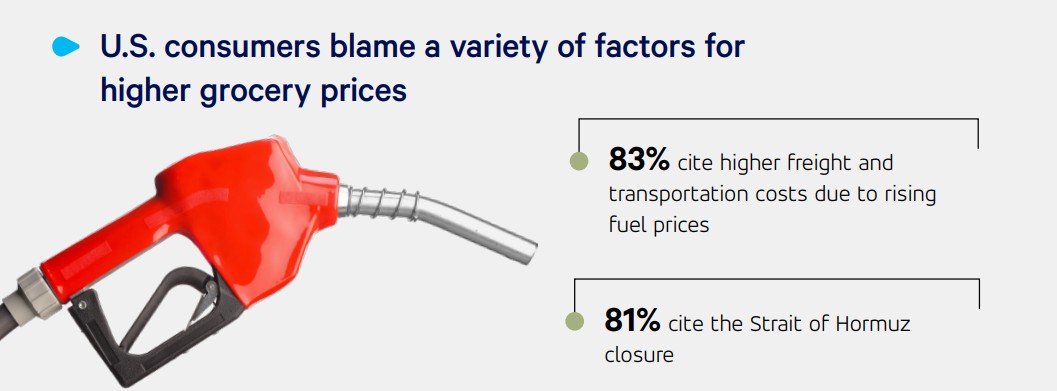
Among respondents, 83 per cent identified higher freight and transportation costs linked to rising fuel prices as the main driver of increasing grocery costs. In addition, 81 per cent believed the closure of the Strait of Hormuz had contributed to higher prices.
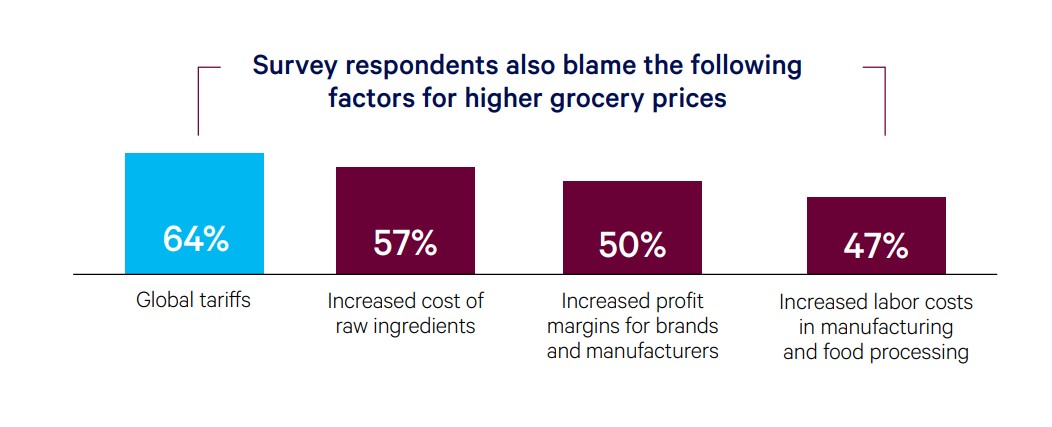
Consumers also cited global tariffs, rising raw material costs, higher manufacturer profit margins and increased labour costs in food manufacturing and processing as contributing factors behind higher grocery prices. Blue Yonder said rapid changes in consumer purchasing patterns are increasing complexity for grocery supply chains, making it more challenging for retailers and manufacturers to forecast demand using historical buying behaviour alone.
This article was produced by the editorial team at Food & Beverage Outlook and published as part of the Outlook Publishing global network of B2B industry magazines.
Outlook Publishing delivers industry insights, company stories, and sector coverage across food production, manufacturing, supply chains, construction, healthcare, mining, and sustainability.
Food & Beverage Outlook provides ongoing coverage of organisations and developments shaping the global food and beverage sector.