



For decades, the workplace drinks landscape in the UK was dominated by tea and coffee. In recent years, this has shifted as offices have become extensions of broader lifestyle trends. Russell Cowley, General Manager of FreshGround, examines the rise in lower-caffeine and wellness-led drinks sitting proudly alongside the more traditional bean-to-cup coffee.
THE FLAVOURS RE-SHAPING OFFICE BEVERAGE CULTURE
There is a much greater diversity of office drinks in today’s working environment. From matcha lattes and chai blends to oat-based beverages and low-caffeine alternatives, the office drinks machine is evolving into a representation of the modern wellness economy.
This shift can be seen first-hand through growing workplace demand for a wider choice and greater alignment with personal well-being goals.
Whilst bean-to-cup coffee is still the UK’s favourite, one of the most notable changes in workplace consumption is the gradual move towards more balanced, functional drinks, reflecting a broader cultural change in how consumers think about energy and productivity.
This aligns with UK regulators, who continue to emphasise moderation in caffeine consumption, with the Food Standards Agency noting that up to 400 milligrams per day is unlikely to cause adverse effects in healthy adults.
At the same time, employers are taking workplace well-being a lot more seriously. According to Deloitte’s 2026 Global Human Capital Trends, 81 percent of workplaces have increased their focus on staff mental health since the COVID-19 pandemic.
Essentially, this all points to a rising demand for a broader and more considered range of workplace drinks. Lower-caffeine coffee options, such as half-caff and blended varieties, are becoming more common. Likewise, decaf offerings that are increasingly able to match the taste and quality of full-strength coffee are being seen more often in the office.
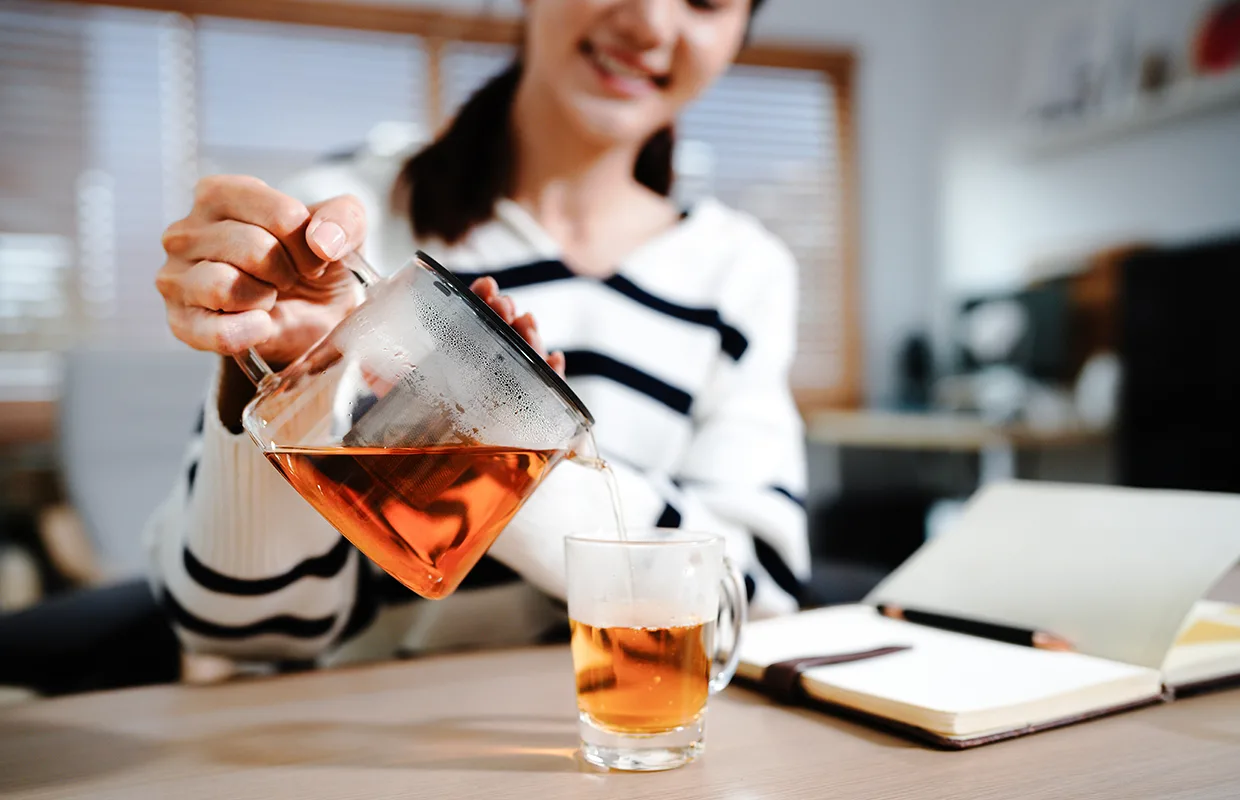
Furthermore, herbal and botanical infusions – including mint, rooibos, and chamomile – are becoming common, particularly for those looking to moderate caffeine intake.
Functional drinks with added benefits, such as enhanced focus, calm, or hydration, are also seeing growing interest as employees look for beverages that support how they feel throughout the working day.

FUNCTIONAL AND WELLNESS-LED DRINKS
As workplace coffee culture has rapidly mirrored the look and experience of the high street, the wellness movement has also moved from consumer lifestyles into corporate environments.
Employees are increasingly making food and drink choices that reflect broader health goals, such as gut health, stress reduction, improved sleep, and sustained energy.
This is strongly reflected in global beverage innovation trends, with recent reports highlighting the continued expansion over time of functional drinks, defined as beverages offering health benefits beyond hydration.
In offices, coffee is now part of a much broader drinks ecosystem, with growing availability of blends featuring ingredients such as ashwagandha and ginseng, in addition to herbal “wind-down” teas designed for late-afternoon consumption.
Electrolyte-infused hydration drinks are also becoming more common, demonstrating an increased awareness of hydration and performance, whilst low- and no-sugar alternatives are in higher demand.
CULTURAL CROSSOVER
Two of the clearest beneficiaries of this shift are matcha and chai. Matcha has moved from a niche café item to the mainstream workplace. Its appeal lies in its combination of moderate caffeine content and L-theanine, which is often associated with calmer, more sustained energy release compared to coffee.
Recent category analysis shows that matcha is now firmly mainstream, particularly amongst younger consumers, with penetration growing in both home and workplace settings.
However, matcha is still closely associated with wellness culture and premium café experiences. As a result, it brings both functional and emotional value into the workplace, whilst also once again showing how the office is mirroring the high street.
Chai is also gaining traction, particularly in workplace environments seeking inclusive, caffeine-light alternatives. Its appeal lies in its flavour, which tends to be spiced, comforting, and indulgent, whilst also reflecting a movement towards global tastes.
TESTING GROUND FOR BEVERAGE INNOVATION
Historically, new beverage trends have tended to emerge in cafés, bars, and retail environments before gradually filtering into the home. Increasingly, however, it’s the workplace that’s becoming an early adopter.
Offices are high-frequency consumption environments, where employees typically consume multiple drinks per day, making them ideal settings for trialling and normalising new products at scale. In addition, workplaces benefit from institutional purchasing power, meaning new beverage options can be introduced rapidly across entire organisations, accelerating exposure and adoption.
This means procurement decisions are being shaped by well-being priorities, with HR and facilities teams actively seeking wellness-focused options as part of broader employee engagement and retention strategies.
Perhaps the most significant shift in workplace drinks is not the decline of coffee or tea, but the end of the “one-size-fits-all” mentality that once defined them. Today’s workplace needs to cater to a far broader spectrum of preferences and requirements, from reduced caffeine intake and plant-based or low-sugar diets, through to increasingly diverse cultural tastes and fluctuating energy needs across the working day.
This does not diminish the role of traditional bean-to-cup coffee systems – in many ways, it reinforces it. Coffee remains a central pillar of workplace culture, valued not just for its caffeine content but for the ritual, consistency, and quality experience it provides.
What is changing is the expectation that it should stand alone, as it now sits within a wider ecosystem, where high-quality coffee makes up a broader selection of drinks designed to support well-being and different moments, moods, and needs throughout the day.
Ultimately, the workplace drink is a ritual that reflects identity, well-being, and lifestyle alignment, with coffee remaining at its core whilst sharing space with an expanding range of complementary choices.
This article was produced by the editorial team at Food & Beverage Outlook and published as part of the Outlook Publishing global network of B2B industry magazines.
Outlook Publishing delivers industry insights, company stories, and sector coverage across food production, manufacturing, supply chains, construction, healthcare, mining, and sustainability.
Food & Beverage Outlook provides ongoing coverage of organisations and developments shaping the global food and beverage sector.