



Sheena Raikundalia, Chief Growth Officer at Kuza Biashara, explores why Kenya’s favourite meal is easy to crave and hard to produce, and how fixing broken input systems could unlock 5,000 youth jobs and make local processors competitive again.
CHICKEN AND CHIPS: EASY TO CRAVE, HARD TO PRODUCE
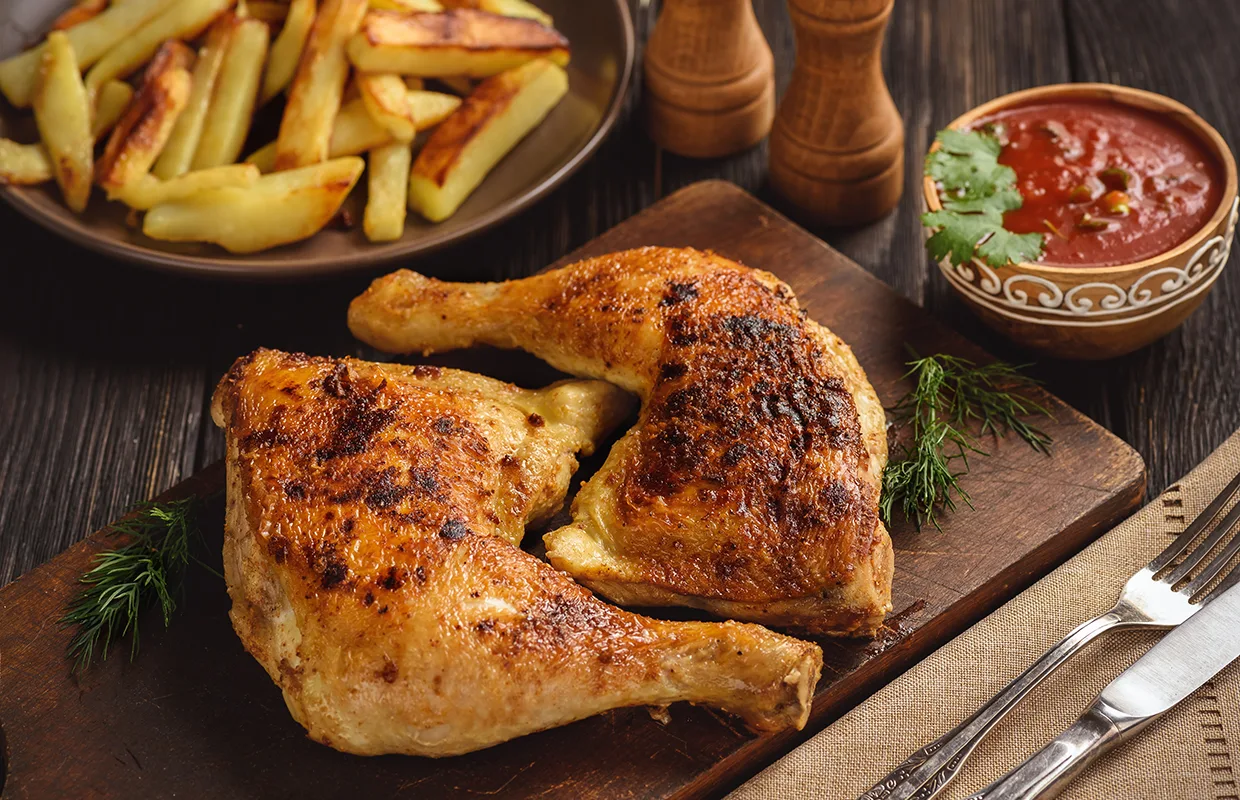
Few meals are as quintessentially Kenyan as chicken and chips. From roadside kiosks to fast-food chains, this simple pairing cuts across classes, incomes, and geographies.
Yet behind the ubiquity of this dish lies a quiet paradox: despite surging demand, the value chains that underpin chicken and chips remain structurally fragile and chronically underperforming.
Over the past months, through deep-dives into both the potato and poultry sectors, culminating in a recent webinar with processors and offtakers, a consistent message has emerged: demand is not the problem, reliability is. Kenya does not lack buyers or consumers – it lacks the aligned systems required to consistently produce what the market wants, when it wants it, and at the quality and cost it requires.
Most Kenyan potato farmers grow what they can afford and sell where they can be paid quickly. That usually means informal markets that are cash-based, fast-moving, and tolerant of variability. They suit the realities of smallholders managing tiny plots with limited cash flow.
Processors, on the other hand, operate under entirely different pressures. They must produce to specification, on schedule, with low rejection rates and high plant utilisation. Yet, the varieties they require, such as Markies, Voyager, and Dutch Robijn, are rarely available locally. Farmers overwhelmingly plant Shangi, a fast-maturing table potato well-suited for boiling and local markets but poorly suited for frying due to its inconsistent dry matter content and storage behaviour.
Even when farmers try to grow to spec, the system is stacked against them: less than one percent of potato seed in Kenya is certified. Without clean planting material, yields stagnate at eight to 10 metric tonnes per hectare (Mt/ha) against a potential of 30 – 40 Mt/ha, and quality falls short of processor standards.
Poultry tells the same story in a different register. Feed, which accounts for 50 to 60 per cent of production costs, is among the most expensive in East Africa, whilst reliable day-old chicks are costly and erratic. Formal buyers demand strict weights, chilling, and biosecurity, but often pay slowly; informal wet markets pay in cash on delivery and overlook variability. Rationally, farmers choose speed and certainty over delayed payments and penalties.
The outcome is predictable: processors operate at barely 40 percent of installed capacity, unable to compete with imports on cost, whilst farmers remain locked into low-productivity systems that deliver neither scale nor stability.

NO SEED, NO SCALE
Most discussions about agricultural competitiveness focus on prices, yet this cannot compensate for the absence of foundational inputs. The central choke point in both value chains is not farmer motivation or processor behaviour – it is the absence of reliable seed, breeds, and input systems to produce to specification.
Without accessible stocks of processing-grade potato seed, it is impossible to meet the size, shape, dry matter, and storability attributes that processors require. No amount of training, contract design, or pricing reform can overcome this bottleneck. It must be solved upstream before efficiency can flow downstream.
FROM SEED TO SCALE: A 5,000-JB YOUTH OPPORTUNITY
Fixing this seed bottleneck offers a powerful economic opportunity, particularly for young people, through the production of apical cuttings.
These clean, disease-free potato plantlets are produced in greenhouses from tissue-culture mother stock. They allow fast, local multiplication of varieties commonly grown by farmers, such as Shangi, as well as processor-preferred varieties like Markies.
Each cutting can generate multiple tubers within a season, compressing a seed multiplication process that typically takes five years into just two to three cycles, whilst reducing the disease risks that undermine conventional seed systems.
This is an inherently youth-friendly enterprise that requires only a quarter-acre plot, modest capital (about KES250,000 to set up a greenhouse), fast turnover, and serves a market where demand far exceeds supply. A small unit can produce 10,000 – 15,000 apical cuttings per cycle, selling at KES10 each. With one to two trained operators per ward in key potato counties, this model could create 2,000 – 2,500 youth-led seed enterprises employing around 5,000 young people whilst simultaneously solving the certified seed constraint that keeps processors starved of consistent, quality raw material.
FROM PLATE TO SEED: REVERSING THE LOGIC WITH COLLABORATION
Kenya’s challenge is not a lack of effort. It is a lack of alignment.
Farmers grow what they can, buyers demand what they cannot get, and processors limp along at half capacity whilst imports quietly fill the gap.
To change this, we must reverse the logic: start from the plate and plan backwards to the seed. That means specifying the products the market wants (chips-grade potatoes, standardised poultry weights), aligning input systems to produce them, and financing production based on offtake contracts rather than collateral.
Solving these systemic bottlenecks isn’t a solo effort – it demands collaboration across sectors to align incentives, share expertise, and scale solutions.
That’s why Kuza Biashara has collaborated with TRANSFORM, an impact accelerator led by Unilever, the UK government’s Foreign, Commonwealth and Development Office (FCDO), and EY, to tackle agricultural challenges in Kenya and beyond. Through this collaboration, we are leveraging over 3,000 trained local changemakers, our “Agripreneurs” – entrepreneurial leaders who deliver market-aligned guidance to smallholder farmers to start thinking market first.
Using over 10,000 bite-sized, hyperlocal videos accessible online and offline through edge computing, these young Agripreneurs help farmers make smarter decisions about what to grow, when, and how based on market demand. The change is happening, but more stakeholders in the sectors need to join and collaborate to drive faster impact.
If Kenya can align these pieces, chicken and chips could become more than a popular street meal.
They could become a case study in how to rebuild value chains for competitiveness, jobs, and food security.
Because chicken and chips are not hard to eat – they are just hard to coordinate.