

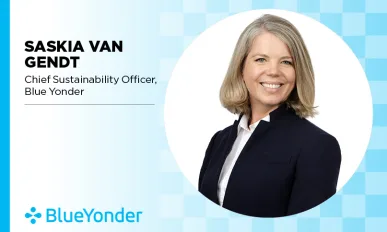
Saskia van Gendt
In the food and beverage industry, volatility is amplified by energy price fluctuations, climate impacts on agriculture, and supply chain disruption. This makes supplier relationships critical, as a significant share of the sector’s environmental footprint sits in Scope 3, spanning farming practices, packaging, logistics, and waste. Many companies struggle to obtain consistent, comparable data across ingredients, packaging, and logistics partners. Without this, it is difficult to accurately understand the carbon and waste footprint of products or make informed trade-offs when sourcing decisions need to change. At Blue Yonder, we help companies and their suppliers convert real-time supply chain activity into usable sustainability metrics, enabling carbon, waste, and efficiency to be managed alongside cost and service performance in day-to-day decision-making. This is important in inventory planning and demand forecasting, where food waste and overproduction remain challenging. We also see more advanced suppliers using sustainability as a competitive differentiator, especially in logistics and cold chain operations, where efficiency improvements directly reduce both emissions and operating costs. The strongest supplier relationships are built on transparency, shared data, and integrated decision-making. When sustainability is embedded into planning and execution systems, companies can reduce waste, strengthen resilience, and maintain profitability even in volatile conditions. Chief Sustainability Officer, Blue Yonder About Saskia van Gendt Saskia van Gendt serves as the Chief Sustainability Officer in Blue Yonder. In this role, she is responsible for developing and executing Blue Yonder’s sustainability strategy and driving sustainability initiatives in product roadmaps and across the company. About Blue Yonder Blue Yonder is the AI company for supply…

Greg Tucker
Supplier relationships have always been built on trust, but volatility has made trust a daily test. Tariffs, material shortages, and shifting logistics have compressed timelines and exposed weak links. We treat suppliers as true partners and an extension of our brand, holding them to the same values and calibre of service that Bay Cities brings to every client. Our Manufacturing Mirror system connects our facilities directly with partner facilities, so we can mirror capacity, share routing, and scale beyond our own four walls. When a disruption hits, we’re already aligned. Another important factor is data. We’ve weaponised it, and it’s making a significant impact on how we operate and guide partners. With cost model simulations running on Microsoft Power BI and Claude agents, the data is at our fingertips, letting us evaluate supplier scenarios in minutes and make decisions guided by real numbers. The result is faster decision-making, ensuring options are modelled before a disruption becomes a crisis. The strongest supplier relationships are built on transparency, collaboration, and a shared commitment to solving problems. In the food and beverage industry, volatility quickly reveals which partnerships are resilient – and rewards those that have invested in working together long before challenges arise. Chairman and CEO, Bay Cities About Greg Tucker Greg Tucker, Chairman and CEO of Bay Cities, has spent five decades building a respected name in retail packaging, in-store displays, and fulfillment solutions. A Hall of Fame inductee of the Association of Independent Corrugated Converters, Greg is an influential voice in corrugated packaging. About Bay Cities Bay Cities is a leading provider of retail packaging, in-store displays, and fulfillment solutions.…

Janne Kouri
At Loncaro, we view our suppliers as strategic partners, not just vendors. In today’s environment, supply chain challenges, shifting consumer preferences, and increased competition require brands to be flexible, nimble, and ready to adapt at a moment’s notice. For a growing brand like ours, strong supplier relationships are absolutely essential. We place a high value on communication and work hard to build genuine partnerships with our co-packers, flavour house, distributors, and other key suppliers. When everyone is aligned and working towards the same goals, we’re able to move faster, solve problems more effectively, and ultimately deliver the best possible product to consumers. As a growing business, we believe it’s critical to be proactive rather than reactive. Forecasting demand, managing inventory, and securing alternative sourcing options are all important parts of our strategy. The beverage industry has changed dramatically since we launched four years ago, and every day brings new opportunities and challenges. That’s why we focus on building relationships based on transparency, trust, and mutual growth. One of Loncaro’s greatest strengths as an emerging beverage brand is our agility. We can make decisions quickly, adapt to changing conditions, and get creative when challenges arise. Whilst volatility may be the new normal, we believe strong partnerships, disciplined planning, and open communication position Loncaro to continue growing whilst delivering the premium, all-natural, best-tasting long drink consumers are looking for. Founder and CEO, Loncaro About Janne Kouri Janne Kouri is the Founder of Loncaro and President of NextStep, a nonprofit supporting the paralysis community. Inspired by his own paralysis journey,…

Mark Rodgers
In today’s unpredictable trading landscape, the most resilient businesses aren’t necessarily the biggest or the best-resourced – they’re the ones that have invested deeply in genuine, trust-based relationships with key customers and suppliers. Whether you’re a buyer or a supplier, we’re navigating the same storms – fluctuating costs, geopolitical disruption, supply chain shocks, and demand uncertainty. Acknowledging this shared reality and taking a collaborative approach to finding mutually workable solutions is the foundation of a healthier relationship and successful outcome. Roberts of Port Dinorwic is a people-first company and we value strong supplier relationships that are built on trust. It’s about being open about forecasts and challenges, not just demanding answers from suppliers; honouring commitments, even when it’s commercially inconvenient; and treating every customer and supplier as long-term partners. When disruption hits, the question isn’t, “Who’s to blame?” – it’s, “How do we solve this together?”. It might mean offering flexible payment terms, finding alternative logistics routes, or co-investing in resilience. The volatile global trading environment is, in fact, an opportunity to deepen relationships with customers and suppliers rather than weaken them. The strongest supply chains aren’t just efficient – they’re human. CEO, Roberts of Port Dinorwic About Mark Rodgers Mark Rodgers is a highly accomplished food industry leader with more than 30 years’ experience driving operational excellence and sustainable growth across the UK’s food manufacturing and supply chain sectors. About Roberts of Port Dinorwic Roberts of Port Dinorwic has built a strong reputation as a reliable supplier of high-quality meal components for the UK’s leading…
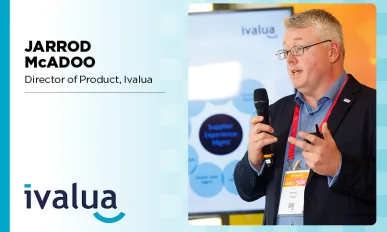
Jarrod McAdoo
A trusted, centralised data foundation is critical for managing supplier relationships effectively. Many enterprises still rely on supplier information that is scattered across enterprise resource planning (ERP) software, spreadsheets, contracting systems, and email inboxes. This data fragmentation makes it nearly impossible to measure supplier performance, anticipate risks, or respond quickly to disruption. The right technology allows procurement teams to unify supplier data, address issues with the data, and gain earlier visibility into potential issues. Once there is a solid, verified foundation, AI tools can assist in monitoring performance indicators, risk signals, and supply constraints to help teams identify vulnerabilities before they affect operations. AI can also accelerate scenario modelling and identify viable alternative suppliers. But technology alone is not enough. Rationalising your supplier base and building rock-solid, trust-based relations with core suppliers is vital, and automation helps by freeing teams to spend more time strengthening strategic relationships. In periods of disruption, teams can draw on relationships to secure preferential access to constrained materials, production capacity, or transportation routes. Combining this with the ability to call on a diverse group of trusted suppliers is key to increasing resilience and minimising disruption. Director of Product, Ivalua