



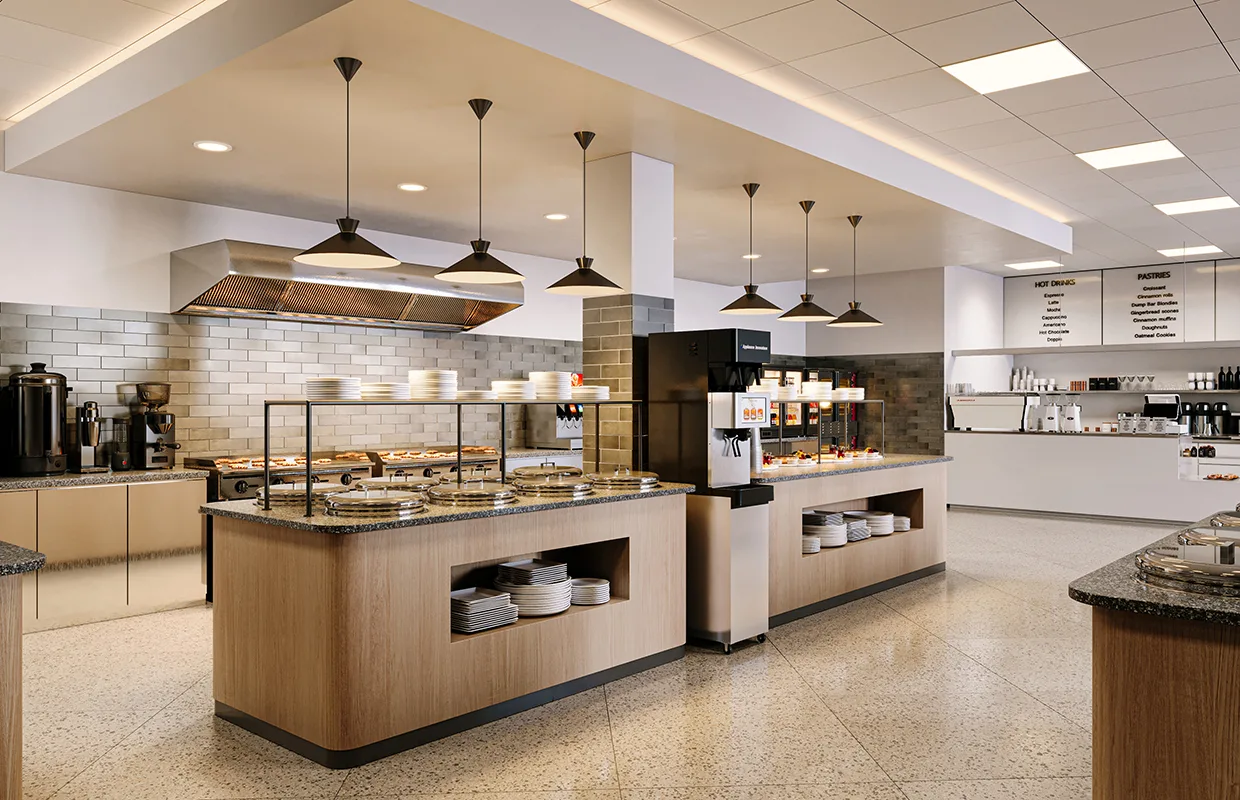
Phil McKee, Chairman and Founder of Appliance Innovation, explores the company’s approach to automation, driven by a commitment to solving operational challenges in the foodservice sector. We discover how the development of products like TurboChef, COFU, and SimpliciTea reflects an ever-evolving environment.
Q&A WITH PHIL MCKEE, CHAIRMAN AND FOUNDER, APPLIANCE INNOVATION
Firstly, could you introduce Appliance Innovation and explain how your vision has influenced the development of products such as TurboChef, COFU, and SimpliciTea?
Phil McKee, Chairman and Founder (PMK): Appliance Innovation was built around a simple principle: meaningful innovation in foodservice comes from solving real operational challenges, not just advancing technology for its own sake.
My vision has always been grounded in understanding how kitchens and beverage programs actually function under pressure, and then engineering systems that simplify those processes while improving performance.
Over the course of my career, that philosophy has guided the development of technologies such as TurboChef ovens and Vector cooking platforms, and more recently, beverage systems like COFU and SimpliciTea.
Each of these innovations began with a practical question: how can we help operators serve faster, maintain consistency, and manage labor more effectively in increasingly demanding environments?
At Appliance Innovation, we bring together engineering expertise, operator collaboration, and data-driven design to create scalable solutions that work reliably in high-volume settings.
What has remained consistent throughout my career is the belief that innovation must be both technically advanced and operationally practical. If technology doesn’t make life easier for the operator, it ultimately doesn’t succeed.
Today, that same mindset continues to drive our work as we focus on the next generation of beverage automation.
We see a significant opportunity to rethink how fresh beverages are produced and served, particularly as labor constraints and consumer expectations continue to reshape the foodservice landscape.
What motivated you to pivot from the world of cooking to focus on beverages?
PMK: The shift into beverages wasn’t something we set out to do initially; it was driven directly by our customers.
For much of my career, our work focused on cooking technology, where innovations like TurboChef were developed through what I would call a technology-push model – where we identified an opportunity and engineered a solution.
However, the move into beverages was different. Operators clearly understood their challenges and were actively demanding solutions – it was a true technology pull.
Large operators began coming to us with very specific challenges that existing equipment couldn’t solve.
Around the same time, both 7-Eleven and QuikTrip approached us with separate needs: one focused on modernizing coffee programs, the other on improving the production and service of fresh tea.
These weren’t abstract ideas; they were operational pain points that were affecting speed, waste, labor, and product consistency.
That demand fundamentally changed our direction. We recognized that beverages were becoming one of the fastest-growing and most operationally complex areas in foodservice, as customer expectations increased while labor constraints intensified.
COFU and SimpliciTea were born directly out of those real-world requests. They represent a shift from simply introducing new technology to solving specific customer-driven challenges at scale. In many ways, that pivot reinforced a core belief I’ve held throughout my career.
The most meaningful innovation happens when you listen carefully to operators and design solutions around the realities they face every day.
“The most meaningful innovation happens when you listen carefully to operators and design solutions around the realities they face every day”
Phil McKee, Chairman and Founder, Appliance Innovation
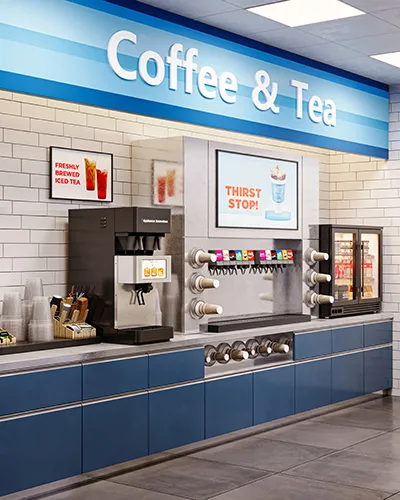
In what ways are beverage programs evolving in response to trends in wellness and flavor expectations?
PMK: Beverage programs today are evolving rapidly as consumer expectations shift toward greater personalization, freshness, and wellness-conscious choices.
What we’re seeing, particularly among younger consumers, is that beverages are no longer just functional; they’ve become a form of expression and experience.
Customization has become an expectation rather than a premium feature. Consumers want the ability to control sweetness levels, experiment with flavors, and create combinations that feel unique to their preferences.
At the same time, there is a growing demand for beverages that feel fresher and more aligned with wellness, whether that means lower sugar content, cleaner ingredients, or options that support hydration and energy without sacrificing taste.
These changes are also reshaping how operators think about beverage programs. Operational flexibility is becoming critical – instead of fixed menus, operators need platforms that allow them to introduce new flavors, respond to trends quickly, and execute their programs profitably at scale.
Ultimately, beverage programs are moving toward greater variety, control, and freshness, and operators that can deliver those experiences consistently will be best positioned to meet evolving consumer expectations.
How does SimpliciTea improve operational efficiency for businesses, simplify beverage preparation for operators, and enhance the customer experience?
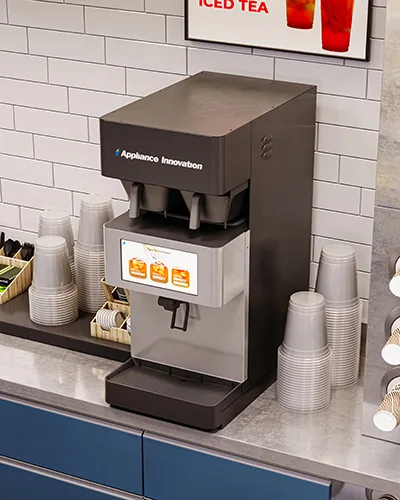
PMK: SimpliciTea was designed to address some of the most persistent challenges operators face with traditional tea programs — product waste, inconsistent quality, and operational complexity.
Traditional batch brewing creates a constant trade-off between maintaining freshness and minimizing waste, so we set out to rethink that process entirely.
By automating the brewing process and ensuring consistent output, SimpliciTea helps operators deliver reliable beverage quality without the variability that often comes with manual preparation.
From an efficiency standpoint, the system eliminates the need to discard stale product. It also reduces the footprint required for traditional urn setups, translating into less waste, improved reliability, and greater flexibility in managing beverage programs.
At the same time, the customer experience improves because beverages are freshly brewed and customizable, creating a more engaging and reliable experience for guests.
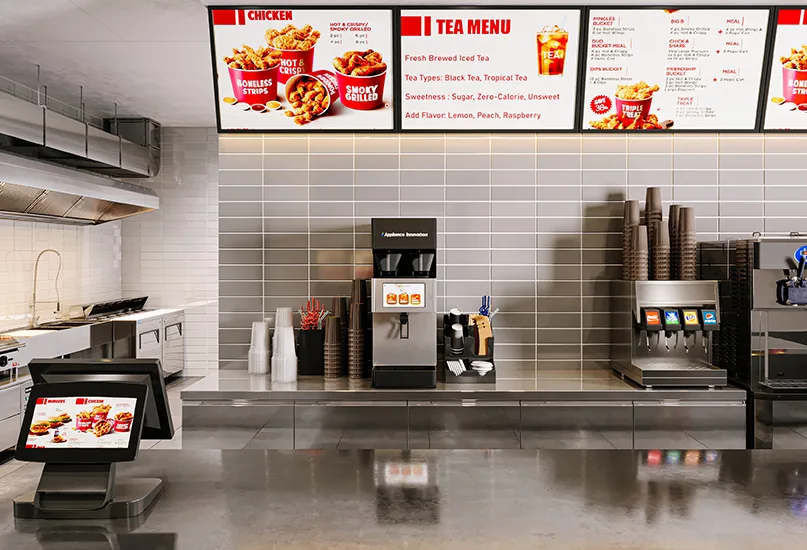
What challenges related to labor constraints does SimpliciTea aim to alleviate?
PMK: Labor constraints are one of the most pressing challenges facing foodservice operators today.
Traditional tea programs require frequent monitoring, batch brewing, cleaning, and costly product disposal, all of which consume valuable staff time.
SimpliciTea was developed to remove much of that manual workload. By automating brewing, monitoring supply levels, and incorporating self-cleaning functionality, the system significantly reduces the hands-on time required from staff.
Instead of managing equipment and checking product freshness throughout the day, employees can focus on serving customers and maintaining overall service quality.
Another important benefit is simplifying training. Automated systems reduce the need for specialized knowledge and help ensure consistent results, even in environments with high staff turnover.
“By automating the brewing process and ensuring consistent output, SimpliciTea helps operators deliver reliable beverage quality without the variability that often comes with manual preparation”
Phil McKee, Chairman and Founder, Appliance Innovation
Can you explain how SimpliciTea addresses consumer preferences for customization and freshness in tea?
PMK: At the point of service, consumers expect beverages to feel fresh and tailored to their preferences, with greater control over flavor, sweetness, and beverage style.
SimpliciTea supports that shift by brewing tea fresh at the point of service rather than relying on pre-brewed batches that degrade over time. This approach preserves flavor integrity while enabling flexible beverage customization.
For operators, that level of customization creates opportunities to expand menu variety and respond more quickly to changing consumer preferences.
Following on from this, what are some of the technological features and innovations of SimpliciTea?
PMK: Tea has been brewed the same way for thousands of years – it’s simply hot water poured over tea leaves. While we are not reinventing the brew process itself, our proprietary dispense technology introduces a capability that hasn’t previously existed in traditional tea service.
With SimpliciTea, tea remains fresh and stable after brewing, while allowing consumers to customize sweetness levels and add flavors to create a beverage tailored to their preferences.
In addition, SimpliciTea incorporates a fully self-cleaning system and automated brewing functions that reduce manual maintenance and simplify day-to-day operations.
Together, these innovations create a more reliable and efficient platform that delivers consistent beverage quality at scale.
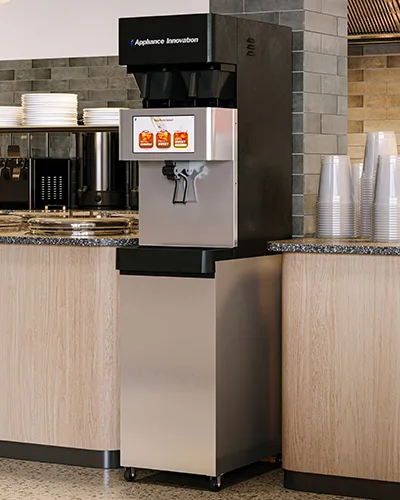
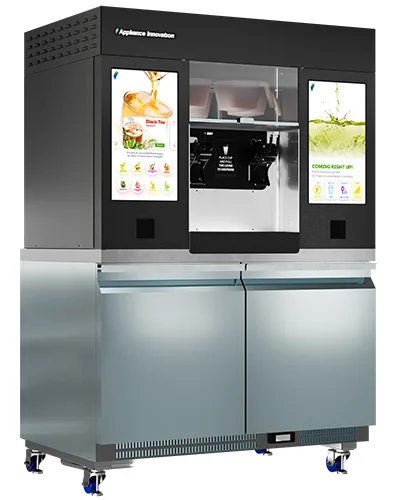
What emerging technologies do you believe will have the biggest impact on the beverage industry in the next few years?
PMK: Automatic fresh-brew technology for coffee and tea will have one of the biggest impacts on the beverage industry in the coming years.
As consumer expectations shift toward customization and freshness, operators will increasingly rely on systems that enable precise control over flavor, sweetness, and product consistency.
We are also seeing rapid growth in technologies that combine automation with personalization, enabling consumers to create beverages that match their individual preferences while maintaining operational efficiency.
Platforms like SimpliciTea and COFU reflect this broader shift, expanding what’s possible and allowing operators to deliver a more personalized beverage experience at scale.
Finally, what insights can you provide on the future of the beverage industry?
PMK: The future of the beverage industry will be shaped by how effectively manufacturers respond to rapidly changing consumer expectations.
As preferences shift — particularly with the rise of self-service and consumer-facing machines — those expectations are increasingly shaping how equipment is designed and deployed.
Manufacturers must create systems that are intuitive, reliable, and easy to operate. Beverage technology, in particular, will continue to evolve at the pace of consumer tastes.
The greatest opportunity for manufacturers lies in developing machines that not only serve beverages efficiently but also influence how consumers discover and engage with new beverage options.
For more information, visit https://getsimplicitea.com
This article was produced by the editorial team at Food & Beverage Outlook and published as part of the Outlook Publishing global network of B2B industry magazines.
Outlook Publishing delivers industry insights, company stories, and sector coverage across food production, manufacturing, supply chains, construction, healthcare, mining, and sustainability.
Food & Beverage Outlook provides ongoing coverage of organisations and developments shaping the global food and beverage sector.