



In an era where sustainability is no longer a choice but a necessity, Langham Hospitality Group has emerged as a leader in the industry. With a steadfast commitment to environmental stewardship, the 40-property group has embraced innovative food and beverage practices that not only reduce waste but also enhance the guest experience. Chris King, Vice President of Food and Beverage, discusses setting a benchmark for luxury hotels worldwide, proving sustainability and sophistication can go hand-in-hand.
PIONEERING SUSTAINABILITY IN FOOD AND BEVERAGE OPERATIONS
At the heart of sustainability efforts at Langham Hospitality Group (LHG) lies a circular approach to food waste. This strategy focuses on thoughtful sourcing, maximising ingredient use, reducing waste, and creating value from byproducts.
Each property in our portfolio has been empowered to develop location-specific solutions, reflecting the unique culinary traditions and resources of their regions. This decentralised approach ensures sustainability is not just a corporate directive but a lived practice across our portfolio.
Sustainability becomes most meaningful when it is embedded into the everyday decisions we make, including how we source, prepare, and serve food.
This approach reflects how our teams are translating broader sustainability commitments into practical, localised action, finding thoughtful ways to respect the ingredients we work with in each location whilst enhancing the guest experience.
SIGNIFICANT IMPACT
Our properties have embraced this mission with creativity and ingenuity, turning potential waste into culinary and cocktail masterpieces.
For instance, at Cordis, Auckland, we have found a novel use for the peels and pulp from our fresh orange juicer at the breakfast bar, transforming them into an artisanal marmalade compote that adds a zesty touch to breakfast dishes.
The impact is significant, saving approximately 390 kilograms (kg) of peels and pulp from landfill annually.
At The Langham, Boston, by repurposing trimmed portions of premium fresh cod and salmon, we have created an enticing Coastal Catch Burger. This guest favourite prevents up to 220 kg of top-quality fish from going to waste each year.
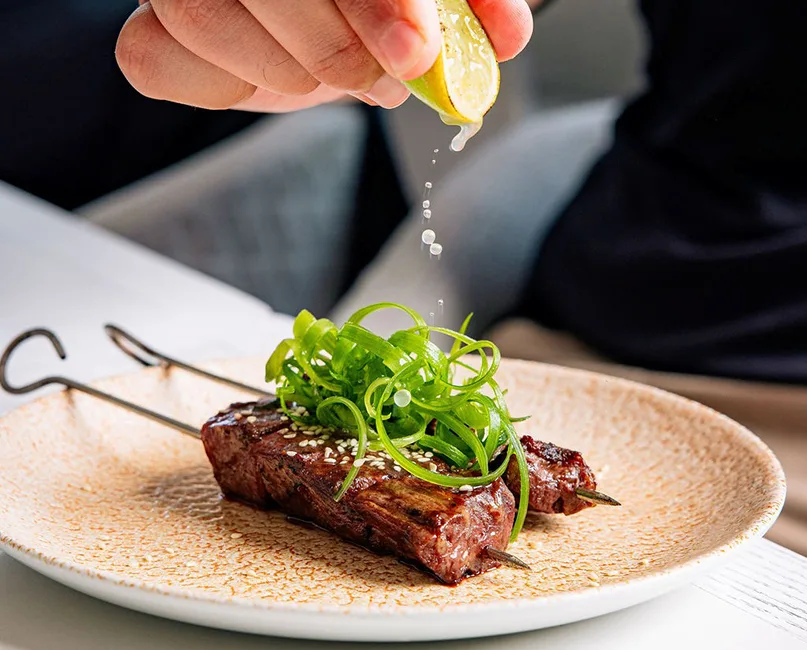
At The Langham, Gold Coast, premium Wagyu beef, utilised from cut-centric dishes, is repurposed into elegant Kushiyaki Wagyu Beef Skewers, whilst Wagyu fat is rendered in-house to produce Wagyu tallow.
These practices not only reduce waste but also elevate the dining experience.
“These practices not only reduce waste but also elevate the dining experience,”
Chris King, Vice President of Food and Beverage at Langham Hospitality Group
INSPIRING INNOVATION
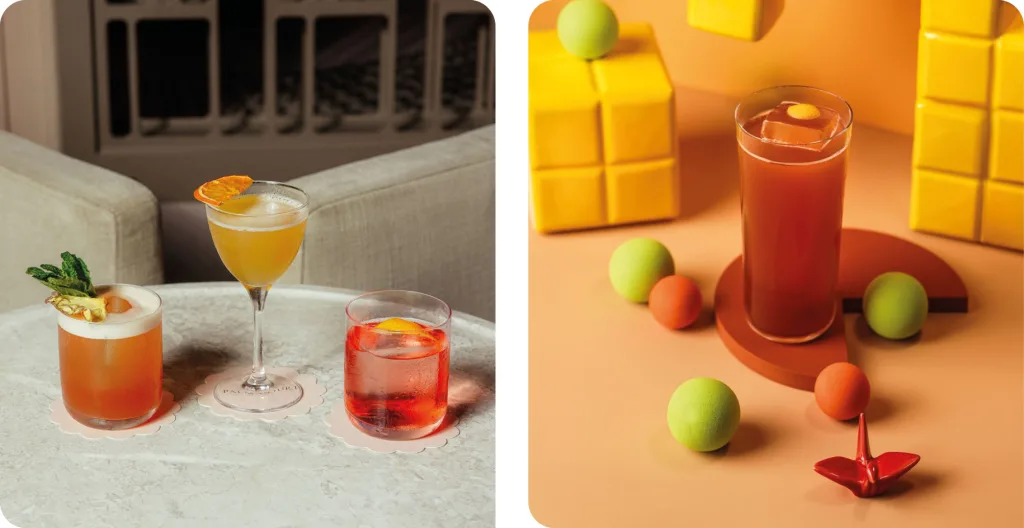
Additionally, our lobby bar uses near-overripe fruits and excess citrus peels to craft house-infused cocktails, showcasing how sustainability can be both practical and indulgent.
At Eaton HK in Hong Kong, our Terrible Baby terrace bar has introduced two innovative cocktails that upcycle excess ingredients. The Monkey Business cocktail uses excess citrus peel to infuse Lillet, whilst the Dong Ling Cha repurposes coffee grounds to infuse Matusalem rum, creating exceptional layers of flavour from upcycled ingredients. These creations exemplify how sustainability can inspire creativity in mixology.
In 2024, our group’s Hong Kong properties formally launched a groundbreaking upcycling programme, providing an innovative new use for oyster shells, popular on our buffets, by turning them into a vital building material: cement. Oyster shells were utilised to create a limestone alternative, a key ingredient that constituted 80 percent of cement.
This programme was created in collaboration with Hong Kong’s leading cement manufacturer, Green Island Cement, which successfully upcycled eight tonnes of oyster shells from Eaton HK and The Langham, Hong Kong between March 2023 and August 2024.
This unique cross-sector programme is the first of its kind in Hong Kong and mitigated the environmental impacts of transporting limestone from overseas.
As a group, we aim to amplify our efforts and encourage others to take similar initiatives. We hosted a press conference around this initiative to call on all hospitality industry leaders in Hong Kong to pledge to the oyster shell programme.
A LEADER IN SUSTAINABLE HOSPITALITY
Our food and beverage initiatives are part of a larger commitment to sustainability that spans our entire portfolio.
Earlier this year, The Langham, Huntington, Pasadena achieved EarthCheck Master Certification, the highest distinction within the world-leading scientific benchmarking and certification programme.
This milestone reflects 15 years of continuous dedication to environmental stewardship. The property joins five other LHG hotels: Cordis, Auckland and Cordis, Hong Kong, Eaton HK, The Langham, Hong Kong, and The Langham, London, that have also achieved EarthCheck Master status.
In total, 18 LHG properties are EarthCheck-certified, underscoring our leadership in sustainable hospitality.
Our sustainability efforts are not just about environmental responsibility; they also make sound business sense. By reducing waste and maximising ingredient use, we enhance operational efficiency and reduce costs.
Moreover, these initiatives resonate with a growing segment of environmentally conscious travellers who prioritise sustainability when choosing accommodations.
Additionally, our efforts align with broader industry trends. The hospitality sector is under increasing pressure to address its environmental impact, from reducing food waste to minimising carbon emissions.
By taking proactive steps, we are not only meeting these expectations but also positioning ourselves as a leader in sustainable hospitality.
“Our sustainability efforts are not just about environmental responsibility; they also make sound business sense. By reducing waste and maximising ingredient use, we enhance operational efficiency and reduce costs,”
Chris King, Vice President of Food and Beverage at Langham Hospitality Group

EMBEDDING CIRCULAR PRACTICES
Our approach offers valuable lessons for the broader hospitality industry. First, it demonstrates the importance of integrating sustainability into core operations rather than treating it as an add-on. By embedding circular practices into our kitchens and bars, we ensure sustainability is a natural part of our daily operations.
Second, our decentralised approach – empowering individual properties to develop location-specific solutions – highlights the value of flexibility and innovation.
This model allows each property to leverage its unique resources and expertise, resulting in a diverse array of sustainable practices.
Finally, our focus on guest experience underscores the potential for sustainability to enhance, rather than detract from, luxury.
By creating unique food and beverage offerings that reflect our commitment to the environment, we are not only reducing waste but also delighting guests with memorable dining experiences.
As we continue to experiment and share ideas across our portfolio, the potential for further innovation is immense. Our commitment to sustainability is not static but dynamic, evolving in response to new challenges and opportunities.
This forward-thinking approach ensures we will remain at the forefront of sustainable hospitality for years to come. Moreover, our efforts contribute to a broader cultural shift within the hospitality industry.
By demonstrating luxury and sustainability are not mutually exclusive, we are helping to redefine what it means to be a responsible hotel operator in the 21st century.
This article was contributed by a guest author and published by the editorial team at Food & Beverage Outlook, part of the Outlook Publishing global network of B2B industry magazines.
Outlook Publishing features leadership insights, industry perspectives, and company stories from organisations shaping sectors including food production, manufacturing, supply chains, construction, healthcare, mining, and sustainability.
Food & Beverage Outlook explores the companies, innovations, and leaders shaping the global food and beverage industry.