Lucy Pilgrim is an in-house writer for Food & Beverage Outlook Magazine, where she is responsible for interviewing corporate executives and crafting original features for the...
- Deputy Head of Editorial
Share
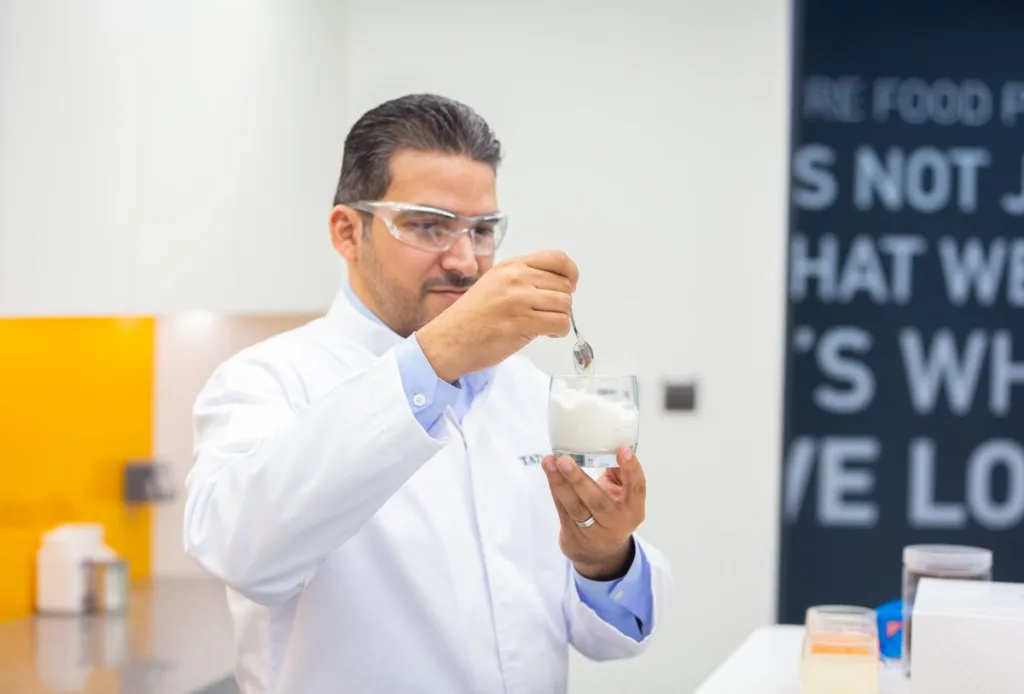
Tate & Lyle’s expanded collaboration with BioHarvest Sciences broadens the development of plant-based sweetening solutions for the food and beverage sector.
Tate & Lyle has expanded its partnership with BioHarvest Sciences (BioHarvest) to accelerate the development of next-generation plant-based sweeteners for the global food and beverage industry.
The collaboration builds on an agreement first established in 2024 and will now focus on developing multiple sweetener molecules designed to address evolving customer requirements around taste, cost, labelling, and sugar reduction.
The programme combines Tate & Lyle’s expertise in ingredient solutions with BioHarvest’s proprietary Botanical Synthesis™ platform, which enables the development of non-GMO, plant-derived ingredients without relying on traditional agricultural extraction methods for rare botanicals.
According to Tate & Lyle, expanding the scope of the collaboration reflects the technical progress achieved so far and supports the company’s strategy of creating a broader portfolio of complementary sweetening solutions that can be used independently or together depending on product requirements.
Tate & Lyle believes no single sweetener can satisfy every food and beverage application, particularly as manufacturers continue to balance consumer expectations for taste, reduced calories, affordability, and ingredient transparency.
ADDRESSING EVOLVING MARKET DEMAND
Victoria Spadaro-Grant, Chief Science and Innovation Officer at Tate & Lyle, said the expanded collaboration strengthens the company’s sweetener innovation pipeline whilst helping address unmet market needs.
“As we define what customers ultimately look for in next-generation sweeteners – sugar-like taste, solutions anchored in nature, reduced calories, and responsible use of resources – it is clear that several unmet needs in the market today are unlikely to be addressed with a single sweetener.”
She added that the partnership provides greater flexibility for customers seeking category-specific solutions that support sugar and calorie reduction whilst balancing formulation and labelling requirements.
Research conducted by Tate & Lyle in 2025 across seven global markets found that more than half of respondents planned to reduce their sugar intake over the following 12 months, with consumers showing strong interest in sweeteners derived from fruits and plants.
BUILDING ON A HISTORY OF INNOVATION
The collaboration also supports Tate & Lyle’s wider focus on healthier food and beverage solutions. The company highlighted its long-standing role in sweetener innovation, including the discovery of sucralose in 1976, the commercialisation of allulose in 2015, and the development of high-purity bioconverted stevia Reb M in 2018.
BioHarvest CEO Zaki Rakib said the broadened programme demonstrates confidence in the company’s Botanical Synthesis™ technology and the progress already achieved through the partnership.
“Together, we are enabling access to differentiated, plant-based sweetening solutions designed to support a range of sensory, application, and economic requirements,” Rakib commented.
This article was produced by the editorial team at Food & Beverage Outlook and published as part of the Outlook Publishing global network of B2B industry magazines.
Outlook Publishing delivers industry insights, company stories, and sector coverage across food production, manufacturing, supply chains, construction, healthcare, mining, and sustainability.
Food & Beverage Outlook provides ongoing coverage of organisations and developments shaping the global food and beverage sector.
Lucy Pilgrim is an in-house writer for Food & Beverage Outlook Magazine, where she is responsible for interviewing corporate executives and crafting original features for the magazine, corporate brochures, and the digital platform.