



Nestlé has published its first Dairy Plan report, outlining progress in reducing greenhouse gas emissions across its dairy value chain while supporting dairy farmers through regenerative agriculture, animal welfare improvements and business development initiatives.
- Dairy Strategy Focuses on Sustainable Production and Supply Chain Resilience
- Emissions Reduction Driven by Feed and Manure Management
- Regenerative Agriculture Adoption Continues to Grow
- Animal Welfare and Productivity Linked to Sustainability Goals
- Supporting Farmer Livelihoods and Future Generations
- Building a More Resilient Dairy Supply Chain
Dairy Strategy Focuses on Sustainable Production and Supply Chain Resilience
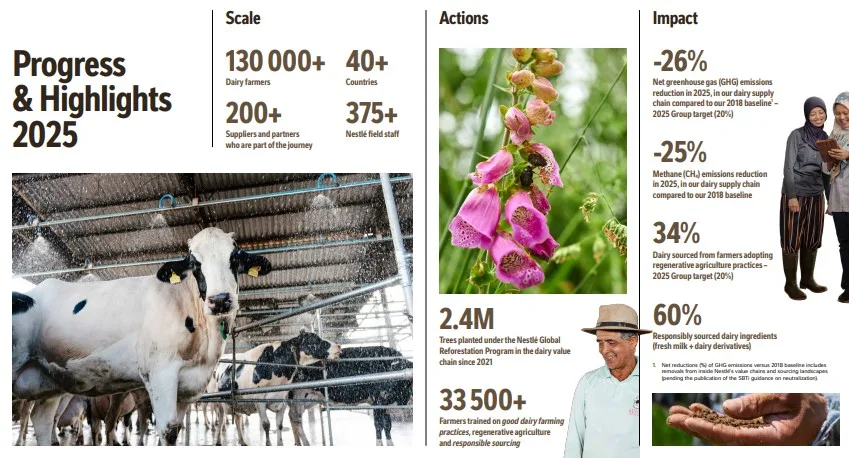
The company reported a 26% reduction in greenhouse gas emissions across its dairy value chain in 2025 compared with its 2018 baseline. The programme spans more than 130,000 dairy farmers, over 200 suppliers and partners, and operations in more than 40 countries.
The Dairy Plan is designed to help transform dairy farming practices while supporting long-term access to high-quality milk and dairy ingredients used across its food and nutrition portfolio.
Antonia Wanner, Chief Sustainability Officer at Nestlé, said: “The Nestlé Dairy Plan is the embodiment of Creating Shared Value: supporting supply continuity, mitigating risk, and delivering benefits to stakeholders.”
“When things are done well, everyone stands to benefit – the farmer who has improved their income or is on firmer ground when challenges arise, Nestlé, which has access to high quality ingredients, and the environment, because of the resource-efficient, nature-based approach to agriculture we are promoting. By working at a systems level with carefully selected partners, we can help the sector transform.”

Emissions Reduction Driven by Feed and Manure Management
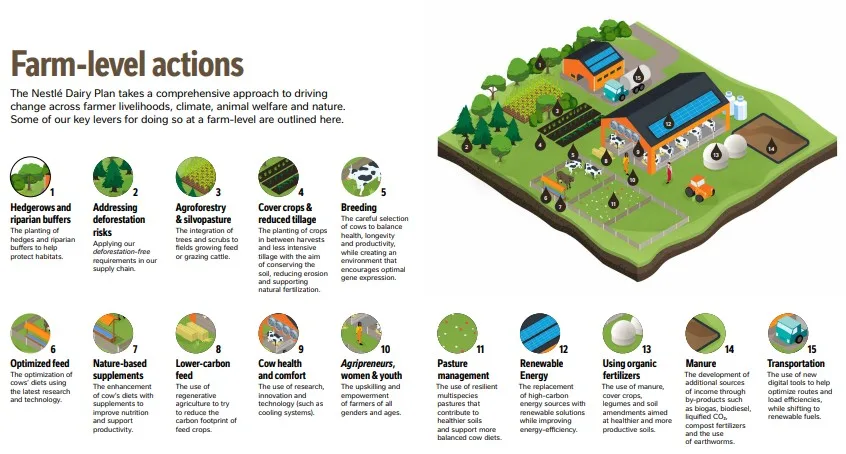
Nestlé is helping farmers adopt practices that address two major sources of dairy emissions: feed production and manure management.
Examples include converting manure into renewable energy and producing compost that can be sold as fertiliser. The company said these approaches can help reduce emissions while lowering energy costs and creating additional revenue streams for farmers.
Working through its Institute of Agricultural Sciences and with academic and government research partners, Nestlé is also deploying science-based technologies aimed at reducing emissions from cow digestion and manure management.
As a result of these initiatives, the company reported a 25% reduction in methane emissions and a 26% reduction in overall greenhouse gas emissions across its dairy value chain.
Regenerative Agriculture Adoption Continues to Grow
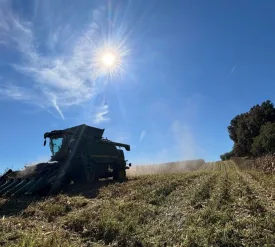
The Dairy Plan also supports the adoption of regenerative agriculture practices across dairy farms.
Nestlé highlighted measures including soil cover, minimum tillage and tree integration, which are intended to improve soil health, support water management and protect habitats and reported that more than 34% of its dairy supply in 2025 came from farmers implementing regenerative agriculture practices.
These approaches help strengthen ecosystem health while supporting farm productivity and resilience.
Animal Welfare and Productivity Linked to Sustainability Goals
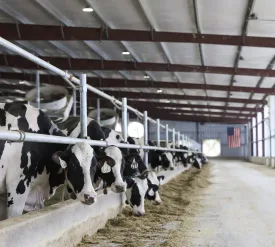
Alongside environmental initiatives, the Dairy Plan incorporates measures aimed at improving animal welfare.
The company said farmers are adopting practices including optimised nutrition programmes, veterinary care and cooling systems to improve herd health and healthier animals can contribute to improved milk quality and productivity, creating benefits for both producers and consumers.
Katja Seidenschnur, Head of Sustainability for the Nutrition & Health business at Nestlé, said: “The Dairy Plan shows that productivity, quality milk and sustainability are closely connected and can positively reinforce each other. Through our collaborative approach across the dairy value chain, we are working to advance this change.
“Together with farmers, we are deploying innovative solutions and technologies that help them build resilience to climate change and economic pressures, develop skills to run their farms as businesses and improve their livelihoods. These practices are also supporting Nestlé’s long-term access to high-quality milk and milk ingredients – crucial for the production of the nutritious products across our portfolio.”
Supporting Farmer Livelihoods and Future Generations
A central component of the programme is supporting the economic resilience of dairy farmers.
The new Dairy Plan helps farmers diversify income streams while building business, financial and farm management capabilities. Training programmes are supported by digital tools that provide decision-making support and additional learning opportunities.
The company believes these initiatives can help make dairy farming more attractive to younger generations by improving income stability and long-term business prospects.
Building a More Resilient Dairy Supply Chain
Nestlé said it reflects a broader effort to create value across the dairy supply chain while strengthening supply security and reducing environmental impacts.
Stephanie Hart, Chief Operations Officer, Nestlé, added: “The Nestlé Dairy Plan is rooted in our operations – it is fundamentally about delivering the right quality ingredients for our portfolio. The progress we have made did not occur overnight.”
“It was built over years of continuous improvement and learning, grounded in the latest science and technology, across our dairy operations, our suppliers and partners, and of course, the farming communities themselves. I have witnessed how passionately our operations teams around the world are working together to make things better. This attention to detail and teamwork is how we can help deliver change at scale.”
This article was produced by the editorial team at Food & Beverage Outlook and published as part of the Outlook Publishing global network of B2B industry magazines.
Outlook Publishing delivers industry insights, company stories, and sector coverage across food production, manufacturing, supply chains, construction, healthcare, mining, and sustainability.
Food & Beverage Outlook provides ongoing coverage of organisations and developments shaping the global food and beverage sector.