



Strengthening Beverage Production and Distribution
The planned investment will support expanded production capacity and stronger distribution infrastructure across the Coca-Cola system’s operations.
The investment is also intended to accelerate innovation across the value chain, reinforcing Coca-Cola’s long-term confidence in the South African market.
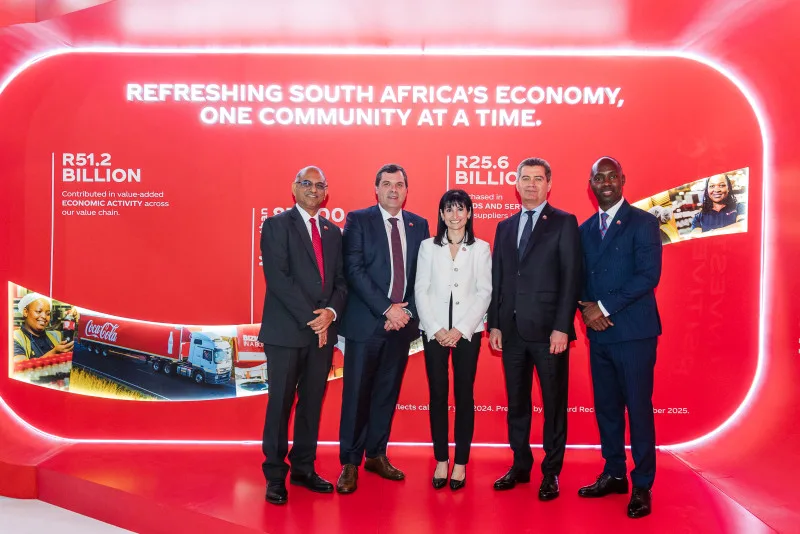
It was announced at the sixth South Africa Investment Conference in Johannesburg by Luis Felipe Avellar, President of The Coca-Cola Company’s Africa operating unit.
The Coca-Cola system in South Africa includes The Coca-Cola Company and its authorised bottlers, Coca-Cola Beverages South Africa and Coca-Cola Peninsula Beverages.
“Our R17.6 billion investment reflects our strong belief in South Africa’s potential and our commitment to growing alongside the communities we serve,” said Luis Felipe Avellar, President of The Coca-Cola Company’s Africa operating unit.
“We hire locally, produce locally, distribute locally and, where possible, source locally, helping to build a stronger, more integrated economy in South Africa.”
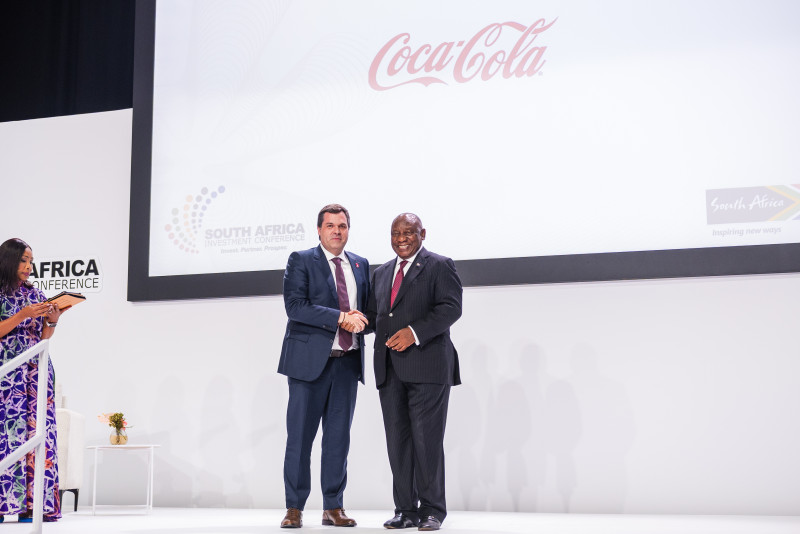
Coca-Cola’s Economic Impact Across South Africa
The investment announcement builds on findings from a socio-economic impact study conducted by consulting firm Steward Redqueen, which assessed the Coca-Cola system’s contribution to South Africa’s economy.
According to the study, the Coca-Cola system and its network of suppliers, distributors and retailers generated R51.2 billion in value-added economic activity in 2024.
The system also supported more than 87,000 jobs across South Africa’s value chain, including sectors such as retail, agriculture, manufacturing, transport and associated services.
This includes 7,822 direct jobs within the Coca-Cola system, as well as approximately 79,300 jobs supported through suppliers, partners and customers.
The findings indicate that for every direct job created by the system, 10 additional jobs are supported across the wider economy.
Supporting Local Suppliers and Agricultural Value Chains
Local sourcing remains a significant part of Coca-Cola’s operations in South Africa.
The study found that the Coca-Cola system purchased R25.6 billion in goods and services from South African suppliers in 2024, supporting industries including sugar production, packaging, transportation and marketing.
This procurement activity helps connect beverage manufacturing to broader sectors of the South African economy.
“South Africa remains one of our most strategic markets in Africa—the beginning of a legacy that dates back to Coca-Cola’s first entry on the continent in 1928,” said Sunil Gupta, CEO of Coca-Cola Beverages Africa.
“These findings reaffirm the Coca-Cola system’s role as a key driver of shared value and sustainable growth within the South African economy.”
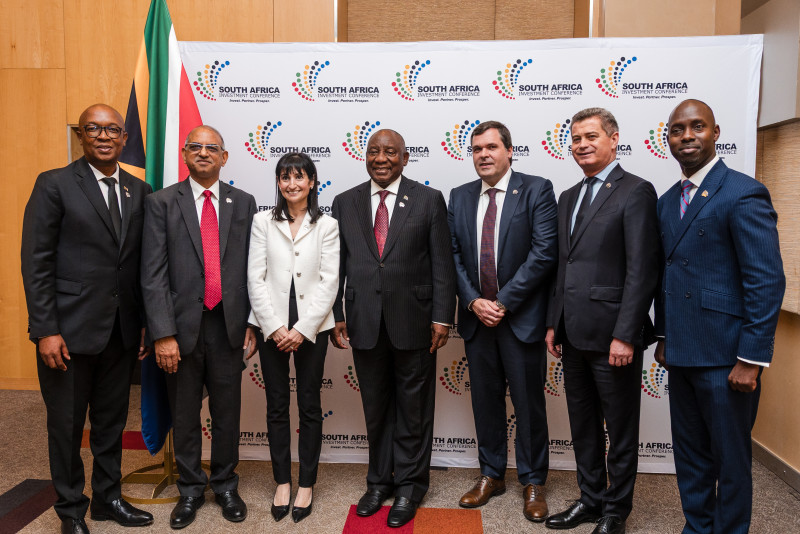
Investment in Community Water Initiatives
Beyond economic activity, South Africa is also participating in the Coca-Cola system’s Africa Water Stewardship Initiative, a nearly $25 million investment through 2030 designed to help address water-related challenges in local communities across 20 African countries.
The investment announcement comes shortly after news that Coca-Cola HBC has agreed to acquire a majority stake in Coca-Cola Beverages Africa, highlighting the strategic importance of South Africa to the Coca-Cola system.
“Congratulations to the Coca-Cola system on this investment announcement,” said Zoran Bogdanovic, CEO of Coca-Cola HBC.
“After the transaction completes, we look forward to continuing the great work of Coca-Cola Beverages South Africa in the years to come.”
Charl Goncalves, Managing Director of Coca-Cola Peninsula Beverages, also emphasised the long-term outlook for the market.
“We are optimistic about South Africa’s future, with a continued focus on investing in our business and in initiatives that support economic inclusion and lasting local prosperity.”