



New research from Nestlé and Côte d’Ivoire’s national agricultural research institute suggests that carefully selected blends of robusta coffee varieties could significantly improve crop yields, climate resilience and coffee quality for growers facing increasing environmental pressures.
Key Developments
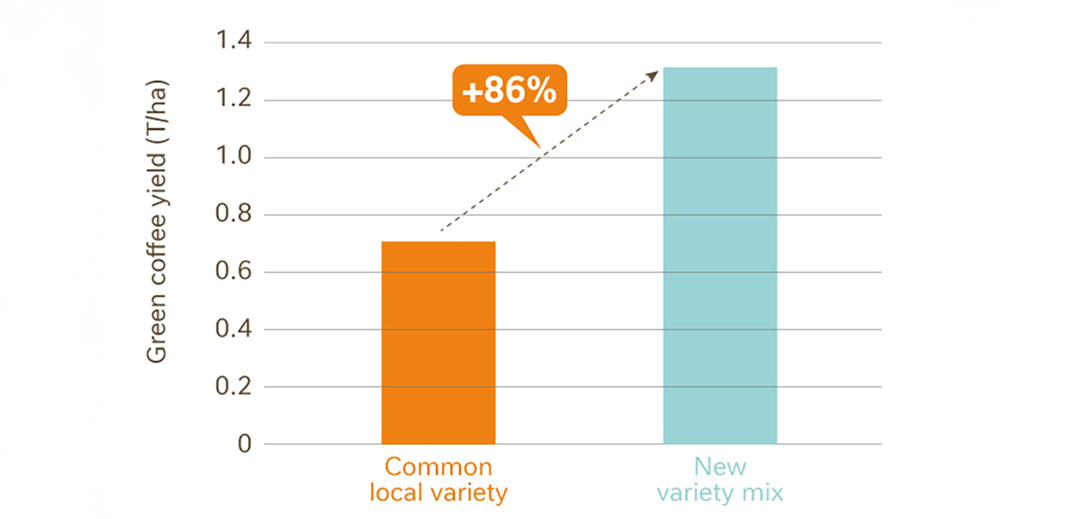
- Research found mixed robusta plantings increased yields by up to 86%
- Study evaluated 18 coffee varieties across four regions in Côte d’Ivoire
- Six top-performing varieties were officially registered for farmer deployment
- Findings support climate resilience and long-term coffee supply sustainability
- Coffee blend also demonstrated improved cup quality and flavour profile
Coffee Breeding Research Targets Climate Resilience
Nestlé has announced new research findings showing that planting a carefully selected combination of robusta coffee varieties can substantially improve agricultural productivity while supporting climate resilience in coffee-growing regions.
The multi-year study, conducted by the Nestlé Institute of Agricultural Sciences in collaboration with Centre National de Recherche Agronomique (CNRA), found that a blend of six robusta varieties increased yields by up to 86% compared with commonly used local coffee varieties.
The research was carried out across four coffee-growing regions in Côte d’Ivoire, where climate variability and declining productivity are increasingly affecting coffee farming operations and supply-chain stability.
Six-Variety Blend Delivers Higher Yield and Improved Quality
Since 2018, researchers evaluated 18 robusta coffee varieties for yield performance, drought tolerance, bean quality, flavour characteristics, and resilience under climate stress conditions.
The six strongest-performing varieties — including two developed by Nestlé and four developed by CNRA — were then tested in combination to assess whether mixed planting strategies could improve outcomes further.
According to the findings, the six-variety blend delivered the best overall results, improving not only yield performance but also crop resilience and beverage quality.
Sensory testing showed that coffee produced from the varietal mix had a smoother flavour profile with reduced bitterness and fewer woody notes commonly associated with robusta coffee.
Supporting Farmer Livelihoods and Supply Security
The six coffee varieties have now been officially registered in Côte d’Ivoire and will be distributed to farmers through cooperatives participating in the Nescafé Plan, Nestlé’s sustainable coffee sourcing program.
“Côte d’Ivoire, the third-largest coffee producer in Africa, is feeling the effects of climate change, with shifting rainfall and rising temperatures impacting crop health and yield,” said Hubert Coffi, Agronomy Manager for the Nestlé Institute of Agricultural Sciences in Côte d’Ivoire.
“Together with partners such as CNRA, we are exploring resilient coffee varieties to help protect farmers’ livelihoods and ensure consumers can continue to enjoy great-tasting coffee in the future.”
The initiative reflects growing efforts across the food and beverage sector to strengthen agricultural supply chains against climate-related disruptions while supporting long-term farmer productivity and economic resilience.
Regenerative Agriculture and Farmer Training Remain Central
Nestlé said the breeding program is supported by its experimental farm in Zambakro, Côte d’Ivoire, where researchers collaborate with local agricultural partners and plant science teams based in France.
In parallel with varietal development, the company said it continues to work directly with coffee growers on regenerative agriculture practices designed to improve long-term soil health and farm sustainability.
Farmers participating in the program receive hands-on agricultural training aimed at improving cultivation methods and adapting production practices to evolving climate conditions.